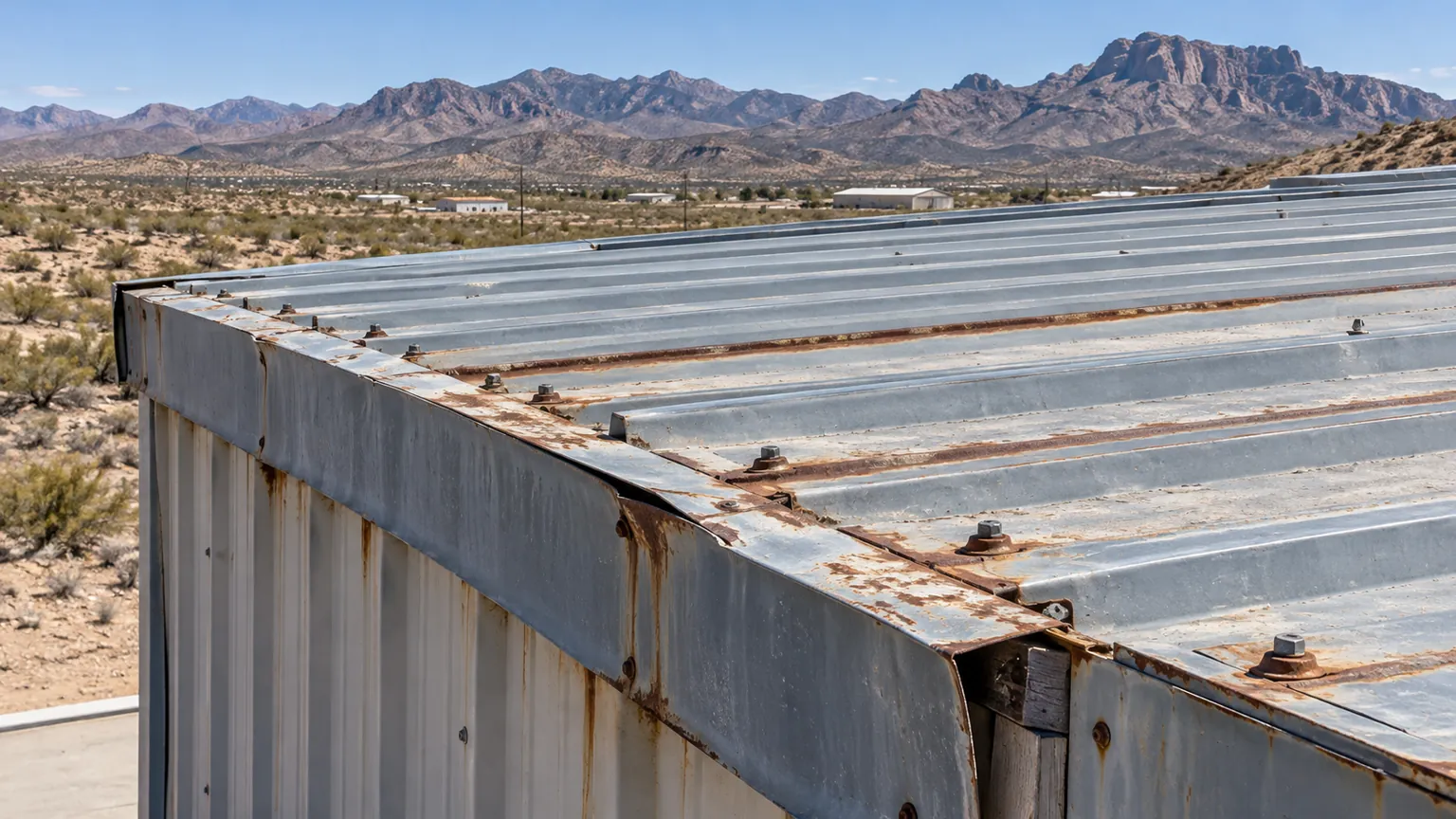
Commercial Metal Roof Repair
Screws, laps, rust, and the flashing around every penetration on ribbed steel panels.
Commercial Metal Roof Repair in Golden Valley
Commercial roof repair in Golden Valley for metal shops on large lots west of Kingman, where cooler stands, flues, and solar racks pierce the panels.
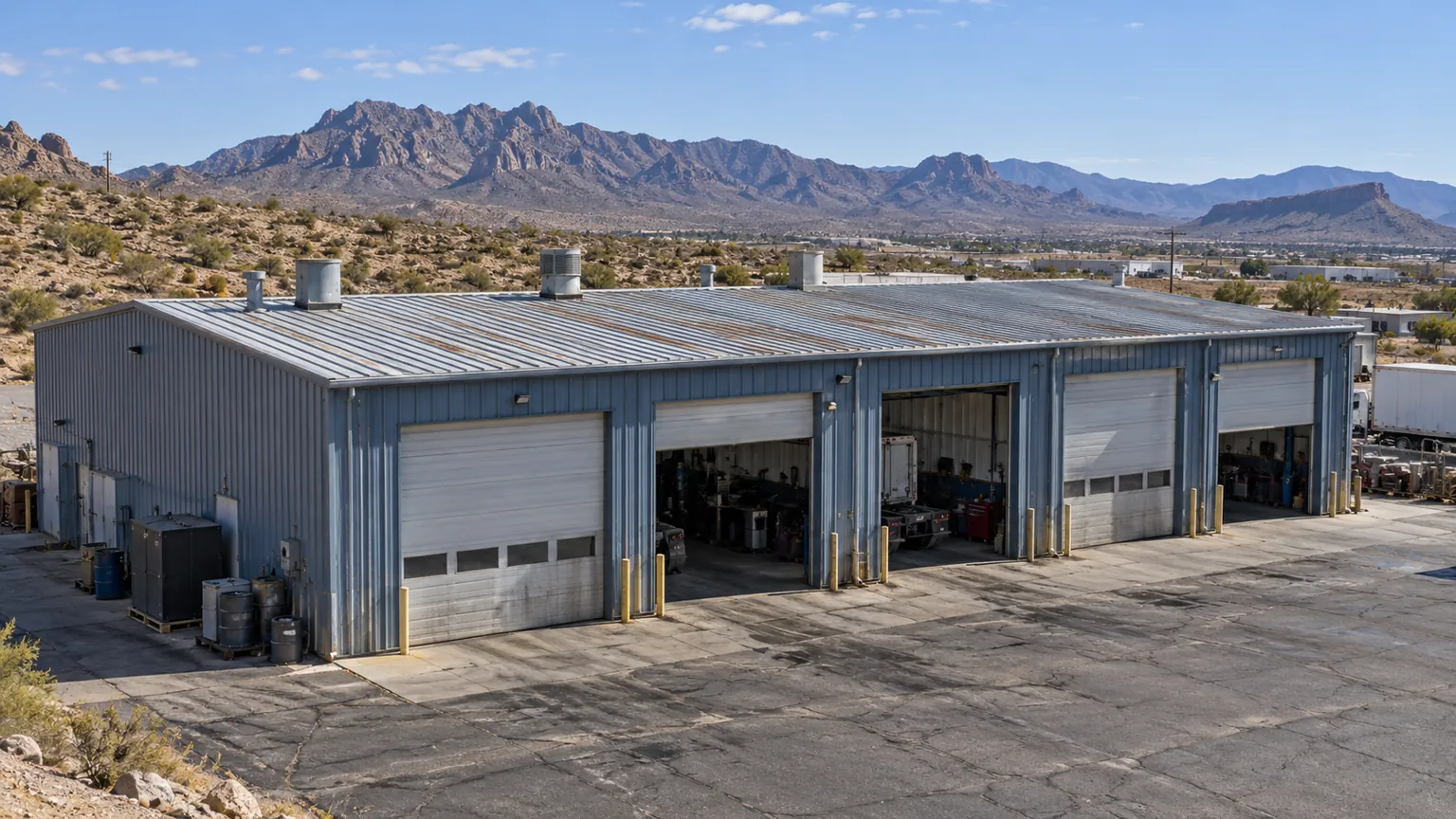 Metal Shop Roof Penetrations
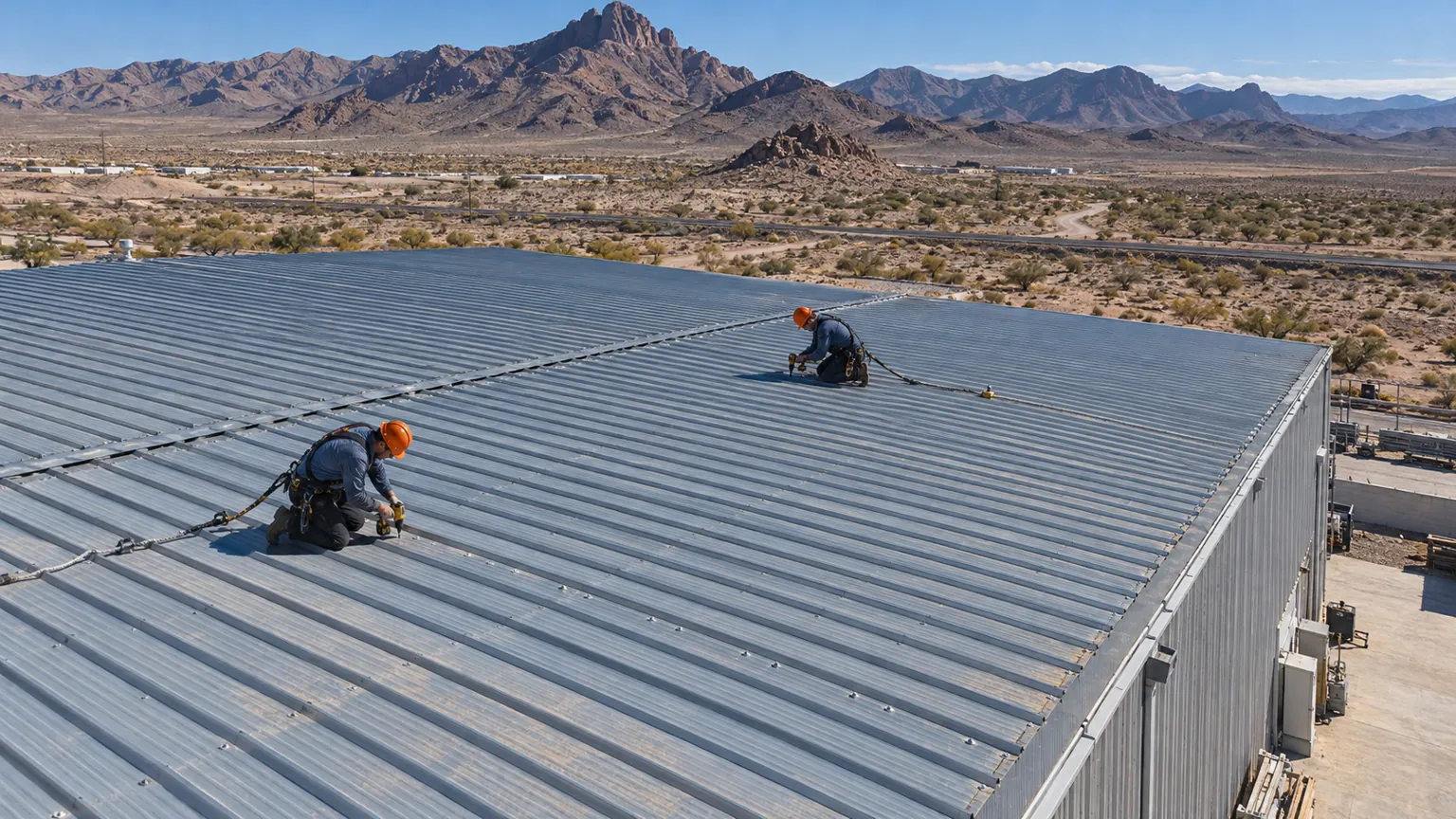
Shops off SR 68 often gain rooftop additions one at a time: an evaporative cooler stand, a stove or heater flue, a conduit run, then solar racks. Each one cuts through ribbed steel, and each cut needs its own flashing.
When those openings were sealed with caulk alone, the daily heat swing pulls the seal apart within a few seasons. The repair gives each penetration a boot or curb sized to the rib.
Metal shop roofs here leak around what was added after the building went up.
Each addition on a metal shop roof is one more opening. Sealing them early keeps leaks from multiplying.
Sealed flue and cooler openings in the roof keep rain off tools and stored equipment.
Water stopped at a penetration never gets the chance to rust the steel around it.
Solid rack mounts on purlins stop panels from flexing and opening new holes.
Fasteners reset during the repair keep nearby laps from opening next.
Two services cover most metal shop calls here.
Screws, laps, rust, and the flashing around every penetration on ribbed steel panels.
Commercial Metal Roof Repair in Golden Valley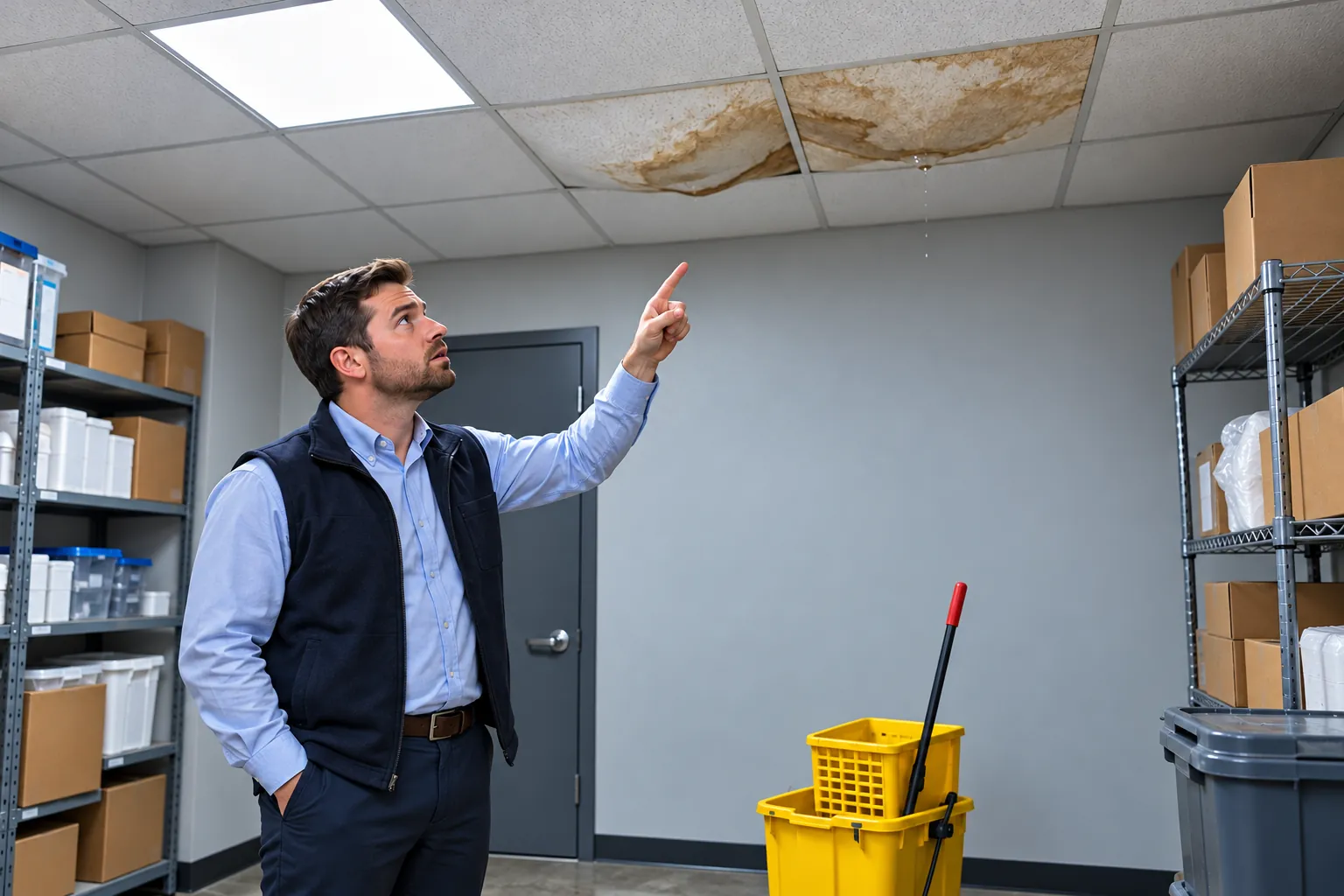
Tracing a drip on a metal shop back to the flue, stand, or rack that let water in.
Commercial Roof Leak Repair in Golden Valley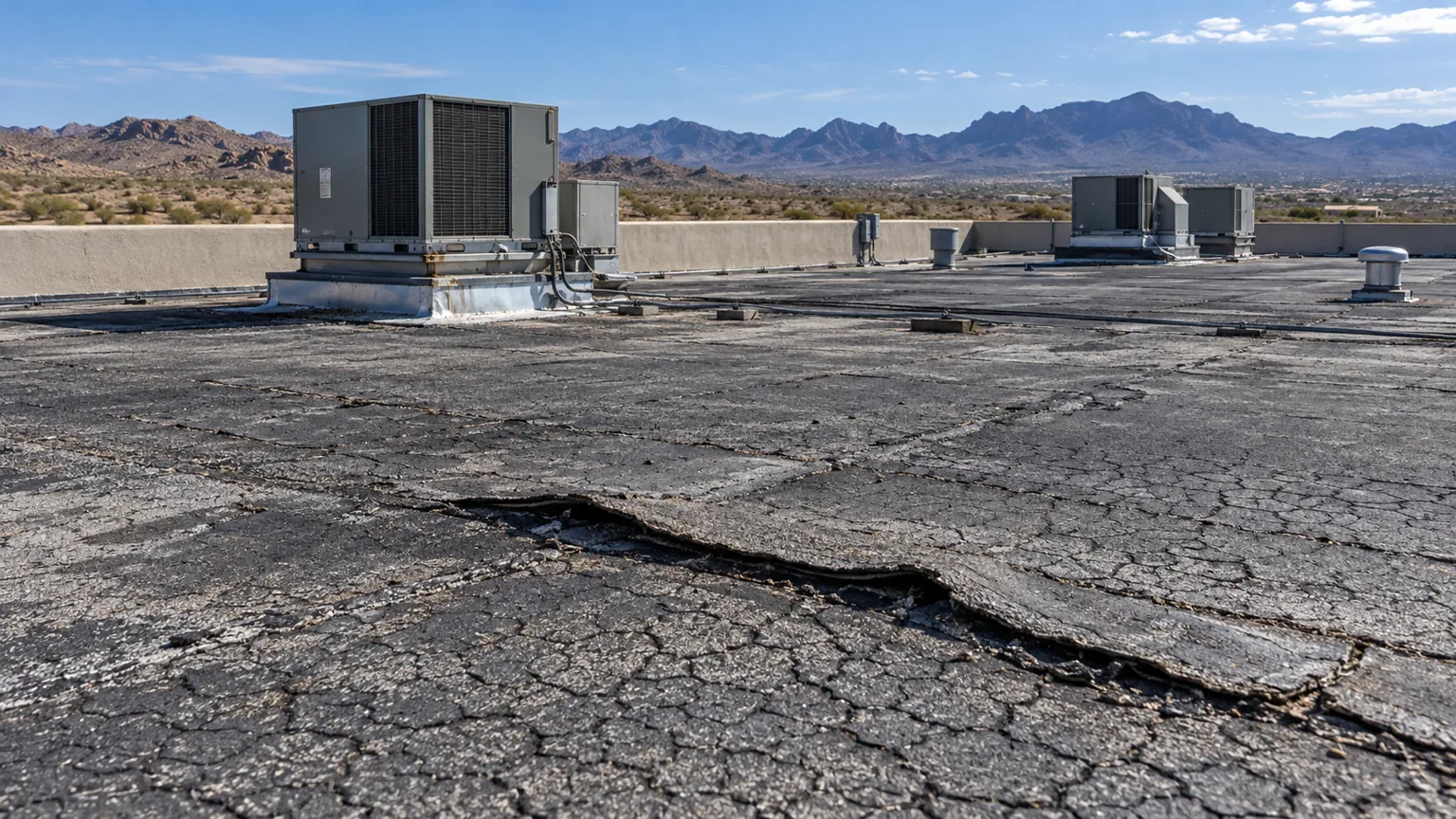
Office additions and lean-tos on Golden Valley lots often carry a low-slope roof, where seams, drains, and curbs get the same flat roof repair as a warehouse.
Flat Roof Repair in Golden ValleyCall and name the equipment above the drip. Penetration leaks on metal shops are usually quick to find once we know what sits there.
Penetration work on a metal shop follows a short, fixed order.
Every pipe, stand, rack foot, and conduit on the roof gets checked, along with the screws and laps around each one. Additions made by different installers over the years usually show up as different sealants, which helps date each one.
The drip location inside gets lined up with the penetration above it, using the purlin layout as a guide. A drip two panels away from a flue still points to that flue when water runs down the rib channel.
Old caulk, cracked boots, and corroded bolts come off so the panel ribs are clean and visible. Corroded bolts on cooler stands get replaced too, since they hold the new flashing in place.
Boots, curbs, and sealed mounts sized to the rib profile go on, fastened into solid steel. Rack feet that sat between purlins get moved where the layout allows, so the panel stops flexing.
Water runs over each new boot and mount while someone inside watches the panel underside. Any fitting that still weeps gets resealed on the spot before the roofer packs up.
These communities sit close to Golden Valley along nearby roads.
Common questions from Golden Valley shop and property owners.
Yes, while the rust stays on the surface. Rust bloom around screws and laps can be brushed, treated, and sealed.
Once a screwdriver tip pushes through, or daylight shows from inside, that panel needs replacing. Older profiles get measured for rib height and spacing, and a short run is sometimes swapped together.
Golden Valley is unincorporated, so roof permits go through the Mohave County Building Division. Whether a repair needs one depends on its scope, so check with the county for your parcel before work begins. Bring the parcel number when you call the county office.
Yes. Hot flues need a high-temperature boot, never standard rubber or caulk. The boot gets shaped to the panel ribs and fastened into solid steel around the pipe. Standard rubber boots soften and split near hot flue pipes within a season or two.
The repair covers the flashing at each rack foot. Racks fastened between purlins flex the panel, so moving mounts onto purlins is part of a lasting fix. Mounts placed on purlins also stop the screws around them from backing out.
Sometimes the cooler drain or overflow is the source instead of the roof. The inspection checks both, since cooler water running across a panel lap can look like a roof leak. A dry-weather check of the cooler drain line usually settles the question quickly.
Yes, when they share the same kind of roof. A shop, a storage building, and an office on one parcel can be inspected together, with each roof getting its own repair list. Each roof gets its own notes, so repairs can be prioritized building by building.
A few flues or stands usually take one visit. A full solar rack row takes longer, because each foot gets reset and flashed in turn. Heavier rack and cooler work can be split across visits to keep the shop running.
On most shops, no. A metal roof spreads weight well when people walk on the purlin lines. Pads help near units that need frequent service. Spreading foot traffic along the purlins keeps panels from denting between them.
List what sits on your shop roof and where the water shows up inside, and the inspection starts with those openings.
Leave a name and number and we will call you back about the leak or damage.
Or call now: +1 (928) 436-4836