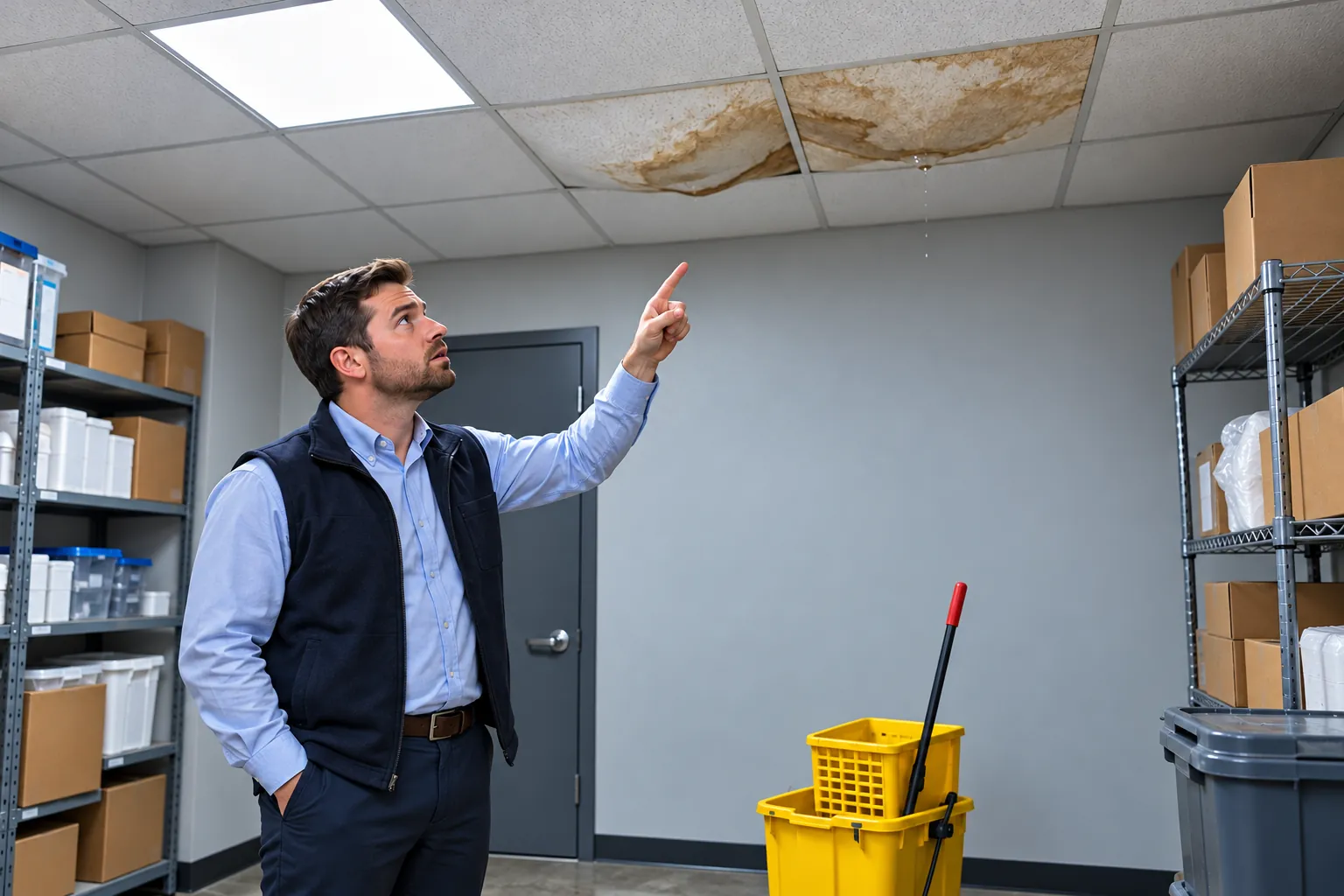
Commercial Roof Leak Repair
Tracing leaks and cutting out wet insulation once its extent is known.
Commercial Roof Leak Repair in Yucca
Commercial roof repair in Yucca for aging roofs exposed along I-40, starting with core cuts and moisture checks that show whether another patch will hold.
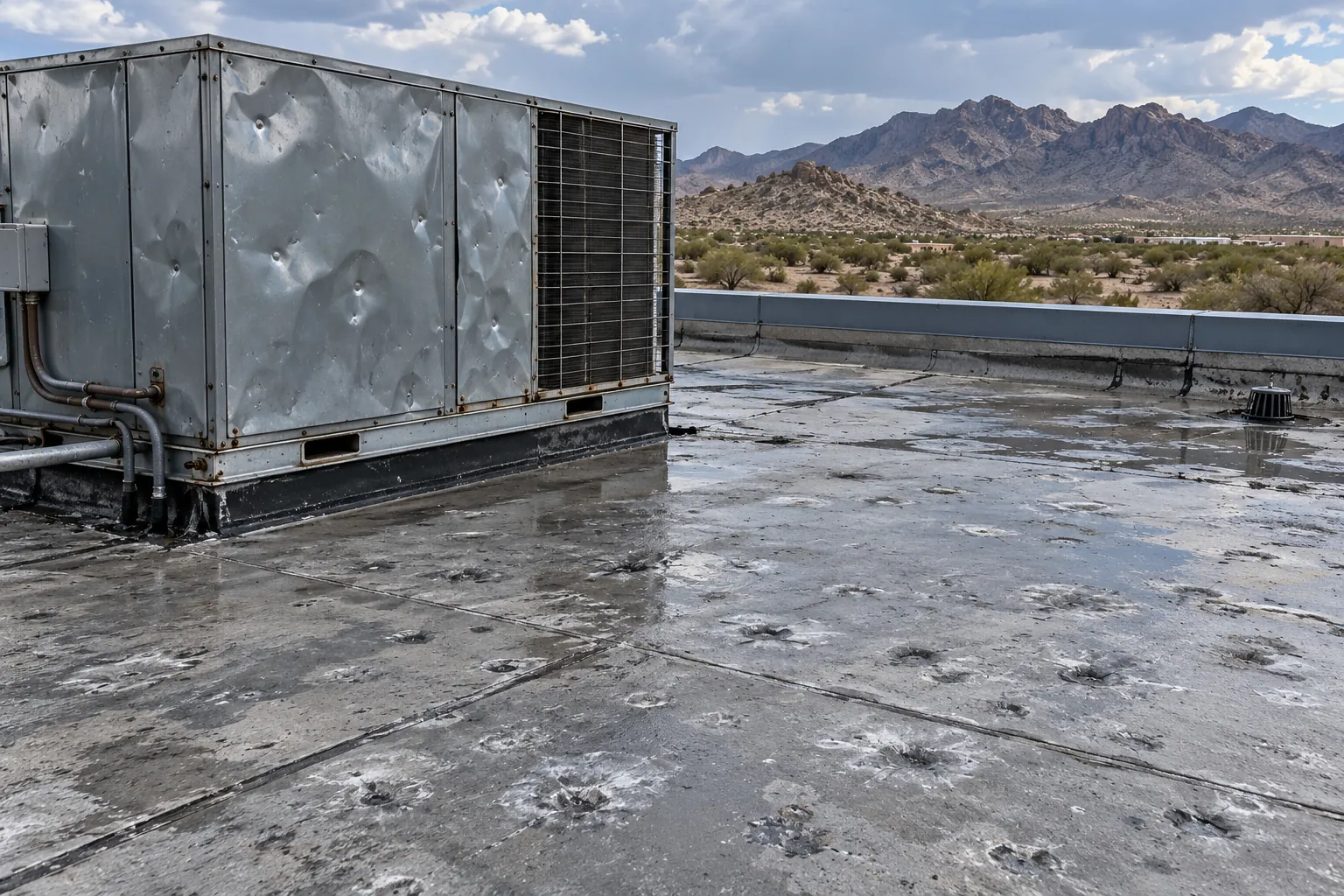 Checking Storm-Worn Membrane
Buildings in Yucca sit along I-40 with open exposure on every side. Older roofs here take sun, wind, and storms with nothing to shelter them, so owners often reach the point of asking whether one more repair makes sense.
That call gets made with facts from the roof: what core cuts show under the membrane, how the deck feels, and how often patches have failed.
These conditions decide whether a Yucca roof gets repaired or planned for replacement.
An exposed roof gets worse quickly once water gets in.
Catching wet insulation early leaves more of the roof worth repairing.
Stopping water early keeps rust off the steel deck.
Knowing the roof has a few years left lets you budget for replacement.
Tightened edges and corners hold up to wind across open ground.
Repair-or-replace calls here usually involve these two services.
Tracing leaks and cutting out wet insulation once its extent is known.
Commercial Roof Leak Repair in Yucca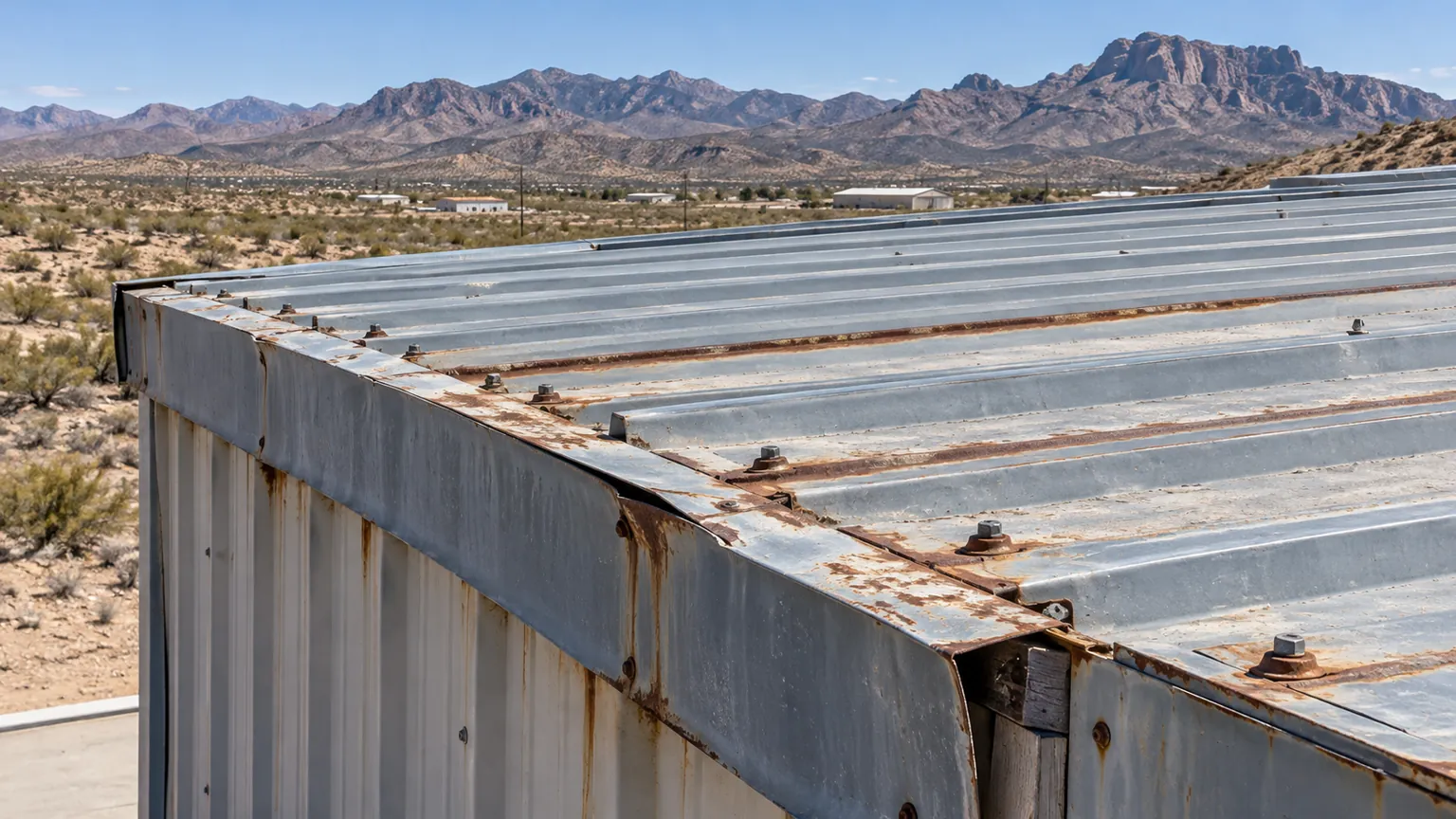
Fasteners, laps, and panels on steel buildings exposed to wind.
Commercial Metal Roof Repair in Yucca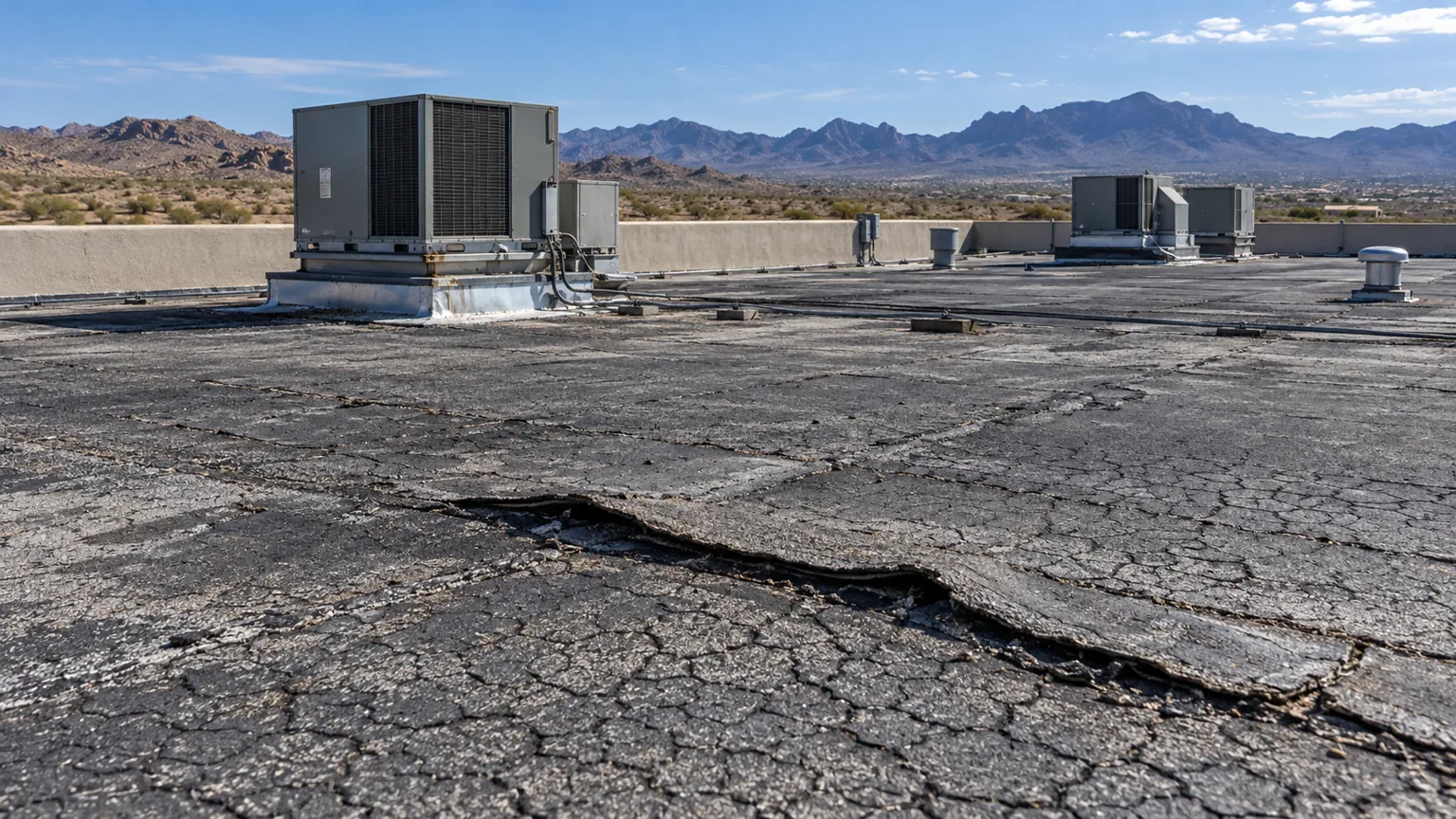
Low-slope roofs along I-40 get seams, drains, and wet sections repaired when core cuts show the rest of the roof is still worth keeping.
Flat Roof Repair in YuccaCall and say how many repairs the roof has had lately. That tells us whether to plan core cuts on the first visit.
The repair-or-replace call is made with measurements taken on the roof.
The roofer walks the whole roof, notes every patch and failed seam, and checks the deck from inside where possible. Every patch gets noted by location, since clusters of patches show where the roof is failing fastest.
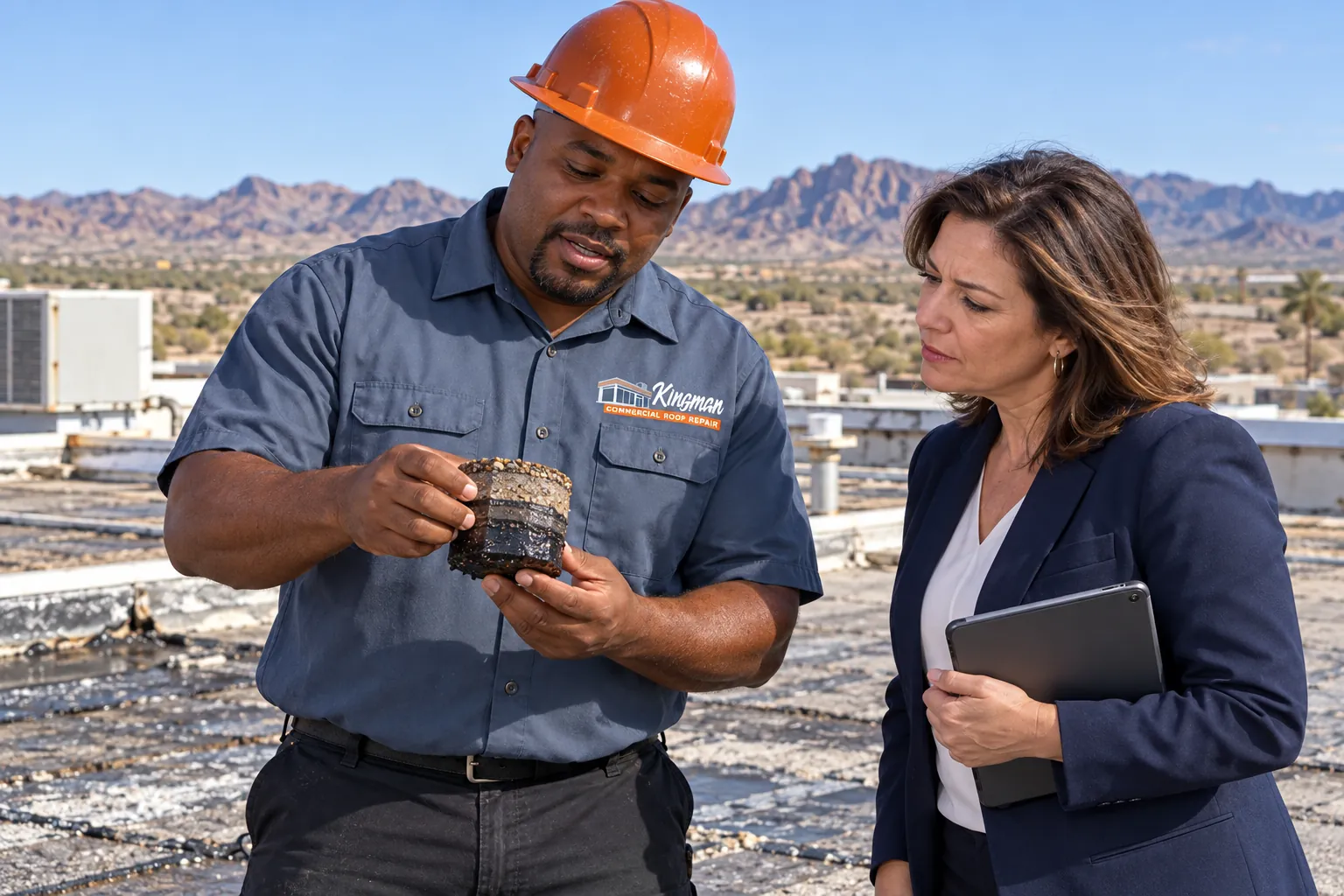
A few small cores and moisture readings show whether insulation is wet and how far it spreads. Cores taken near past leaks and in open field areas give a fair picture of the whole roof.
Soft spots get opened to see whether deck panels are rusted or loose. Deck screws pulled loose by wind get reset where the panels are still firm.
Local damage at seams and flashing gets repaired now. Wide damage goes into a written plan for replacement timing. The plan lists which sections to replace first if the roof is split into phases.
Every core cut gets patched and sealed before the roofer leaves, so the test holes never leak. A sealed core cut is as tight as the roof around it.
These communities sit near Yucca along the roads out of Kingman.
Common questions from Yucca building owners.
It depends on how wet the insulation is, whether the deck is solid, and how old the roof is. Insulation that stays wet keeps feeding leaks, so saturated sections come out.
Deck panels that flex or show rust from inside need repair before new roofing goes on, and patches failing at new seams every season signal age. Core cuts confirm what a stain only hints at.
Yucca is unincorporated Mohave County, so permits go through the Mohave County Building Division. Replacement and deck work are more likely to need a permit than a small repair. Have the parcel number ready when you contact the county office.
A small sample cut through the membrane and insulation down to the deck. It shows how many layers are there and whether they are wet, and it gets patched right after. Several cores across the roof give a more reliable picture than one.
Yes. Wet sections can be replaced now, with the rest repaired and watched. That spreads the cost over time when the roof allows it. Phasing also lets work follow budget years for owners who plan ahead.
That depends on what the core cuts and deck show. Some roofs have a few seasons left with maintenance; others need work before the next monsoon. Roofs with wet insulation near drains often move to the top of the list.
Most wind damage gets repaired: edges refastened, lifted membrane re-adhered, and loose panels resecured. Widespread tearing on an old roof can tip the call toward replacement. Photos of the damage before any work help if the storm is part of an insurance claim.
This service focuses on repair. When replacement is the better call, the inspection explains why and what the core cuts showed. That explanation gives you what you need to talk with a replacement contractor.
Open ground gives sun and wind full access to every side. UV dries the surface and wind works edges and fasteners, so exposed roofs need closer attention. Twice-yearly checks matter even more on roofs with nothing around them to block the wind.
Tell us the roof age and how often it has been patched, and the first visit checks whether repair still makes sense.
Leave a name and number and we will call you back about the leak or damage.
Or call now: +1 (928) 436-4836