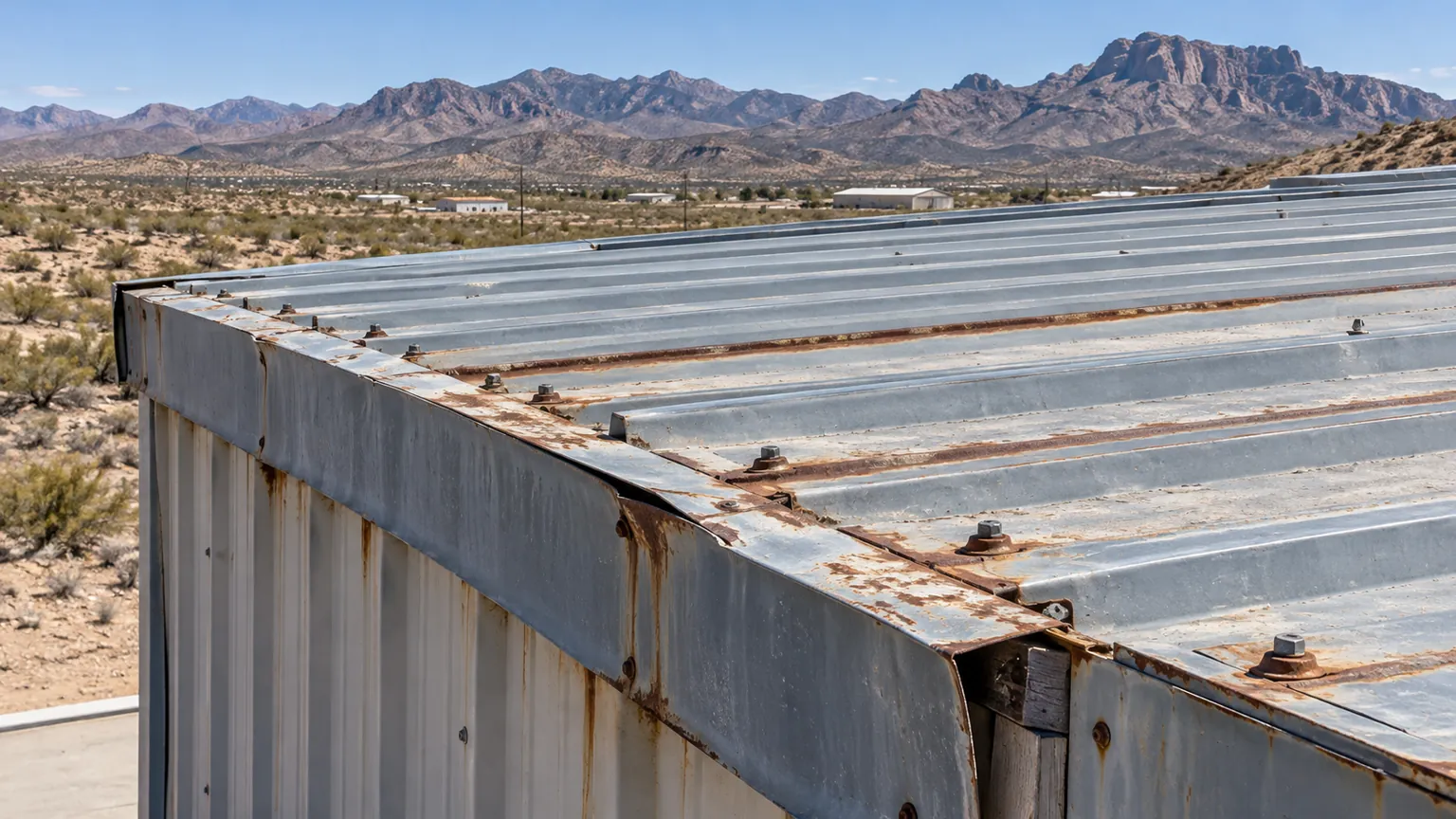
Commercial Metal Roof Repair
Steel plant buildings carry exposed-fastener panels, where screws, laps, and rust need their own repair.
Metal roof repair in Kingman
Industrial roof repair in Kingman for plants and warehouses, scheduled around shifts so exhaust fans, intakes, and the floor below keep running.
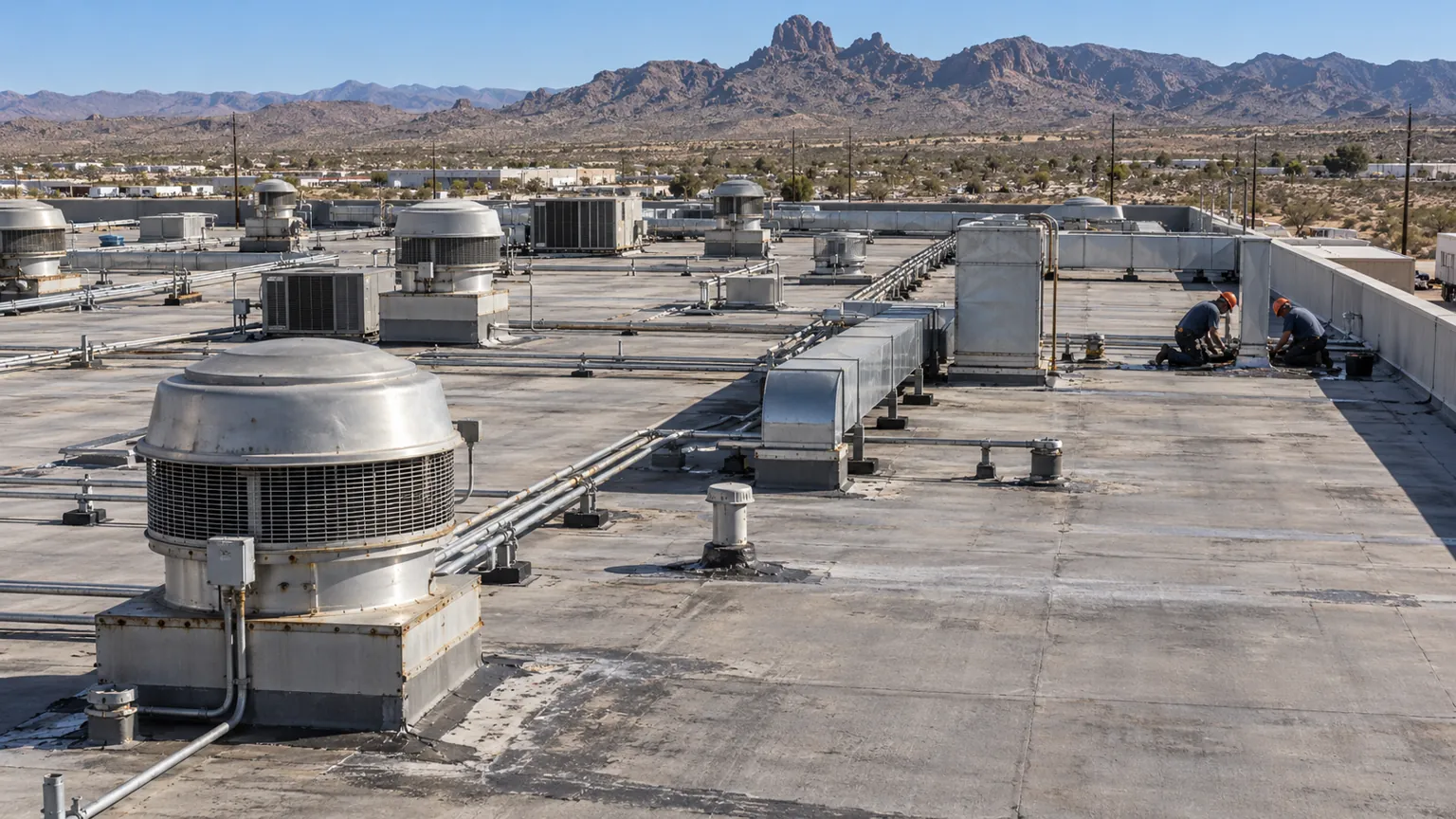 Sealing An Exhaust Fan Curb
Industrial roofs take wear in concentrated spots. Repairs work well when the damage clusters around equipment and paths.
Heat, vibration, and process residue wear down membrane around rooftop equipment faster than the rest of the roof.
Industrial repairs cluster around equipment, so each one is planned with the maintenance team.
| Repair | What It Fixes | When It Is Enough |
|---|---|---|
| Exhaust zone membrane repair | Softened sheet around fan outlets | When the damage stays near the fan |
| Curb re-flashing | Leaks at units, fans, and stacks | When the curb is solid and tall enough |
| Walkway pads | Worn paths to equipment | When the membrane under the path is still whole |
| Penetration sealing | Leaks at pipes, conduit, and supports | When the support layout stays the same |
Water inside a plant reaches more than the ceiling. Early roof repairs protect the work happening below.
Production areas stay dry and open while roof work moves around them.
Sealed curbs keep water out of units, ducts, and electrical below them.
Small zones of wet insulation are cheaper to replace than wide ones.
Pads and patched paths give technicians firm footing on the way to units.
Call and say which line or area sits under the drip and what equipment is on the roof above it. That lets the visit be planned with your maintenance lead.
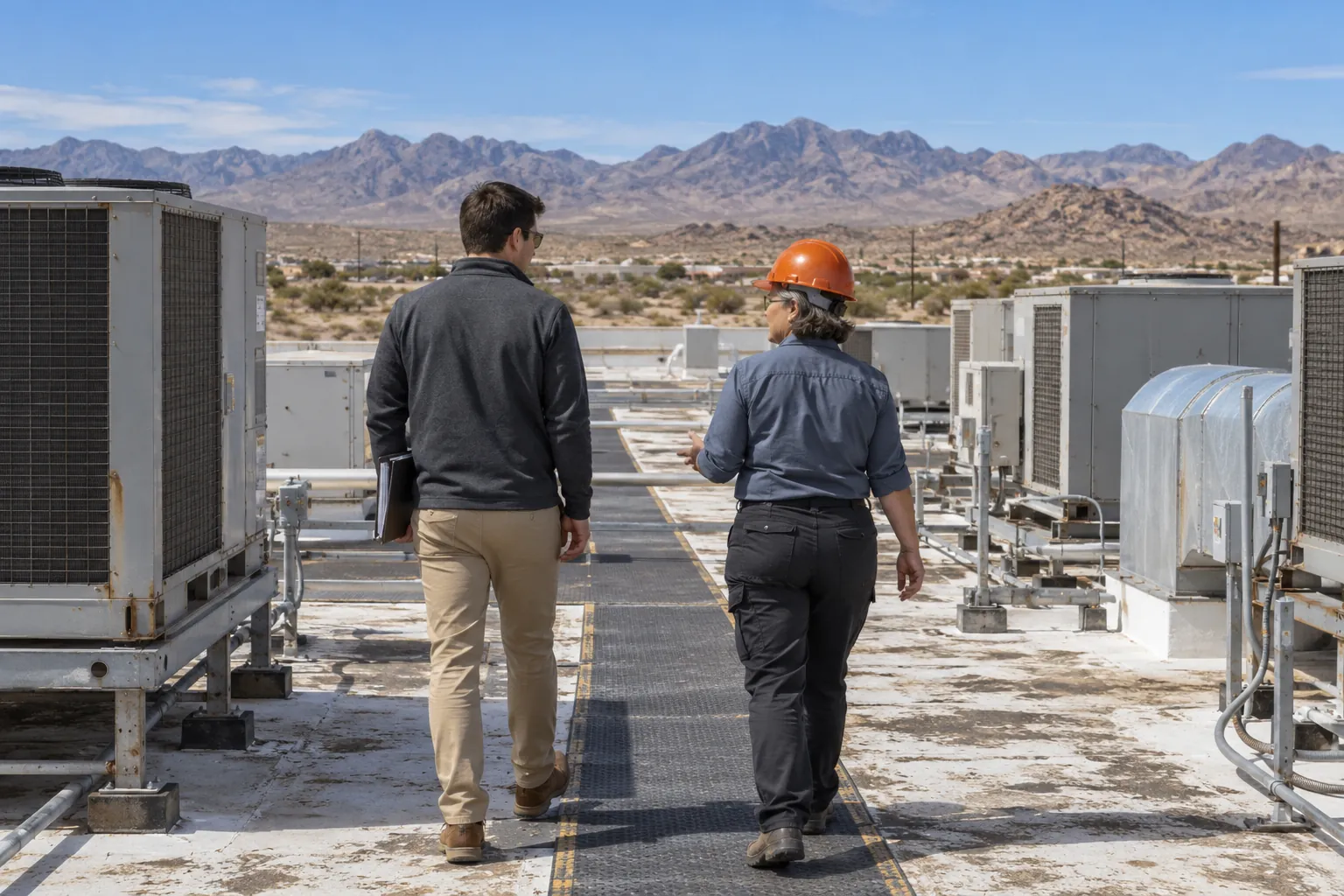
Plant roof work starts with a map of what sits below, so the repair never surprises production.
The roofer and facility manager map roof areas over production lines, clean rooms, and stored inventory, and note every fan, stack, and intake.
Hours get set with the plant, rooftop units are locked out only with maintenance approval, and intakes stay clear of odor and dust.
Each roof area gets opened only as far as new membrane can close it by the end of the shift.
Membrane near fans gets replaced, curbs re-flashed, and pipe supports reset on pads, with heat welding timed for shift changes.
Repaired curbs and penetrations get a water check, and equipment is handed back to maintenance in working order.
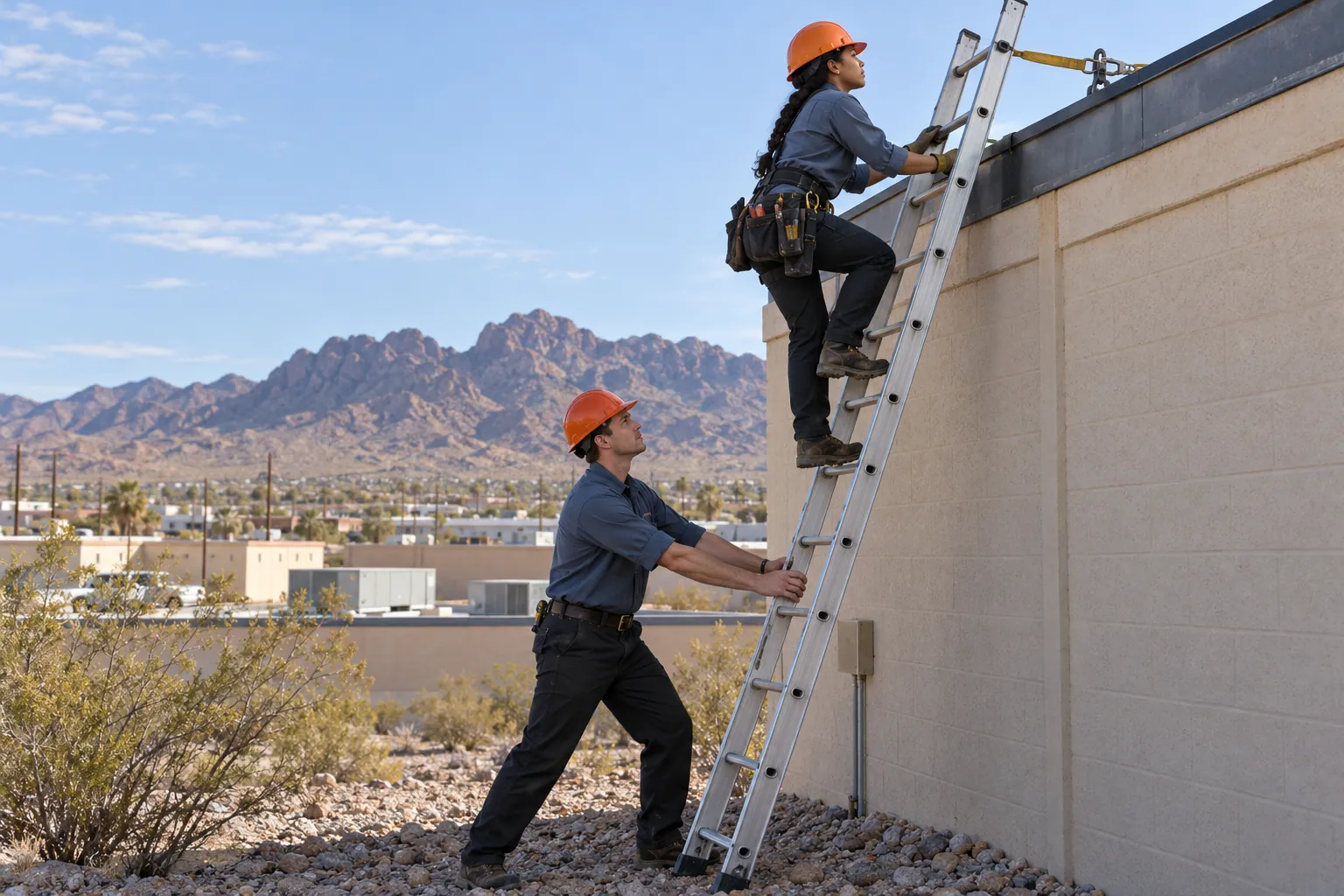
Industrial roofs often need these two services as well.
Steel plant buildings carry exposed-fastener panels, where screws, laps, and rust need their own repair.
Metal roof repair in Kingman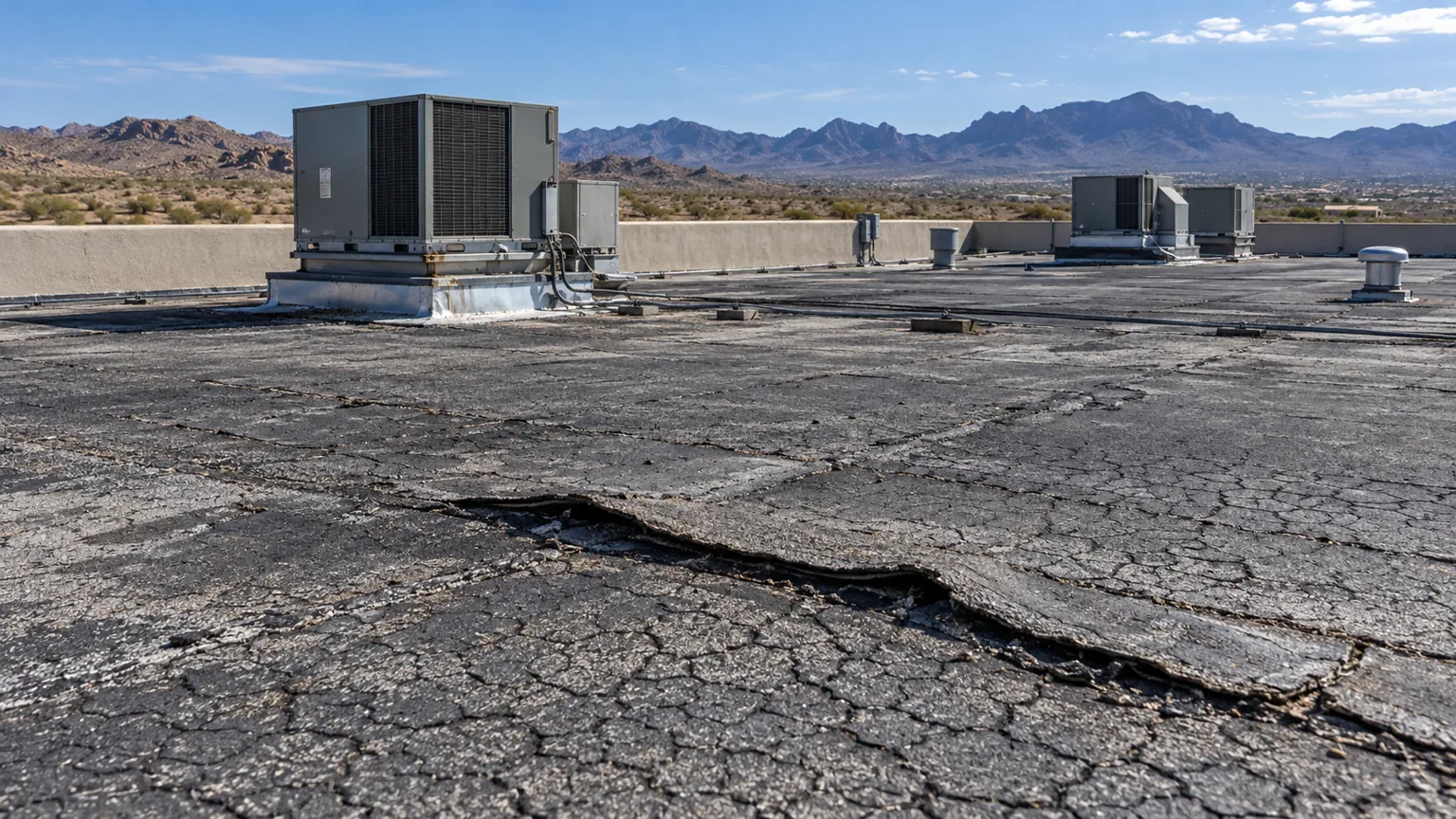
Away from the equipment, plant roofs are flat roofs, and their seams and drains get the same care.
Flat roof repair in KingmanAnswers about repairing plant and warehouse roofs while work continues below.
Yes, by planning around the plant schedule. Roof areas over production lines, clean rooms, and inventory get mapped first, and hours are agreed with the facility manager.
Stacks and intakes stay clear, units get locked out only with maintenance approval, each area closes at shift end, and noisy or odor-producing steps get timed for shift changes.
Heat, vibration, and residue from process exhaust break down membrane and flashing near the outlet. That zone usually needs repair long before the rest of the roof.
Yes. Work areas over sensitive rooms get scheduled with the plant, intakes stay covered or shut down as agreed, and low-odor materials get used near air intakes.
Pads give technicians a set path to rooftop units and spread their weight. Without them, repeated foot traffic wears a strip into the membrane that eventually leaks.
Yes. New curbs and penetrations get flashed into the existing membrane, and pipe supports go on pads. Adding equipment without that flashing is a common source of new leaks.
The plant maintenance team. Units near the work area get locked out only with their approval, and the roofer works around anything that has to stay running.
Call right away. Temporary control on the roof, such as tape over an open seam or a cleared drain, slows the water, and the permanent repair goes into the next work window the plant sets.
Repairs work on roofs of any size because they focus on zones. Large roofs get divided into areas, and each area is opened and closed within one shift.
Tell us about the plant, the equipment on the roof, and the hours that work best, and the inspection starts with a roof map.
Leave a name and number and we will call you back about the leak or damage.
Or call now: +1 (928) 436-4836