Commercial Roof Leak Repair
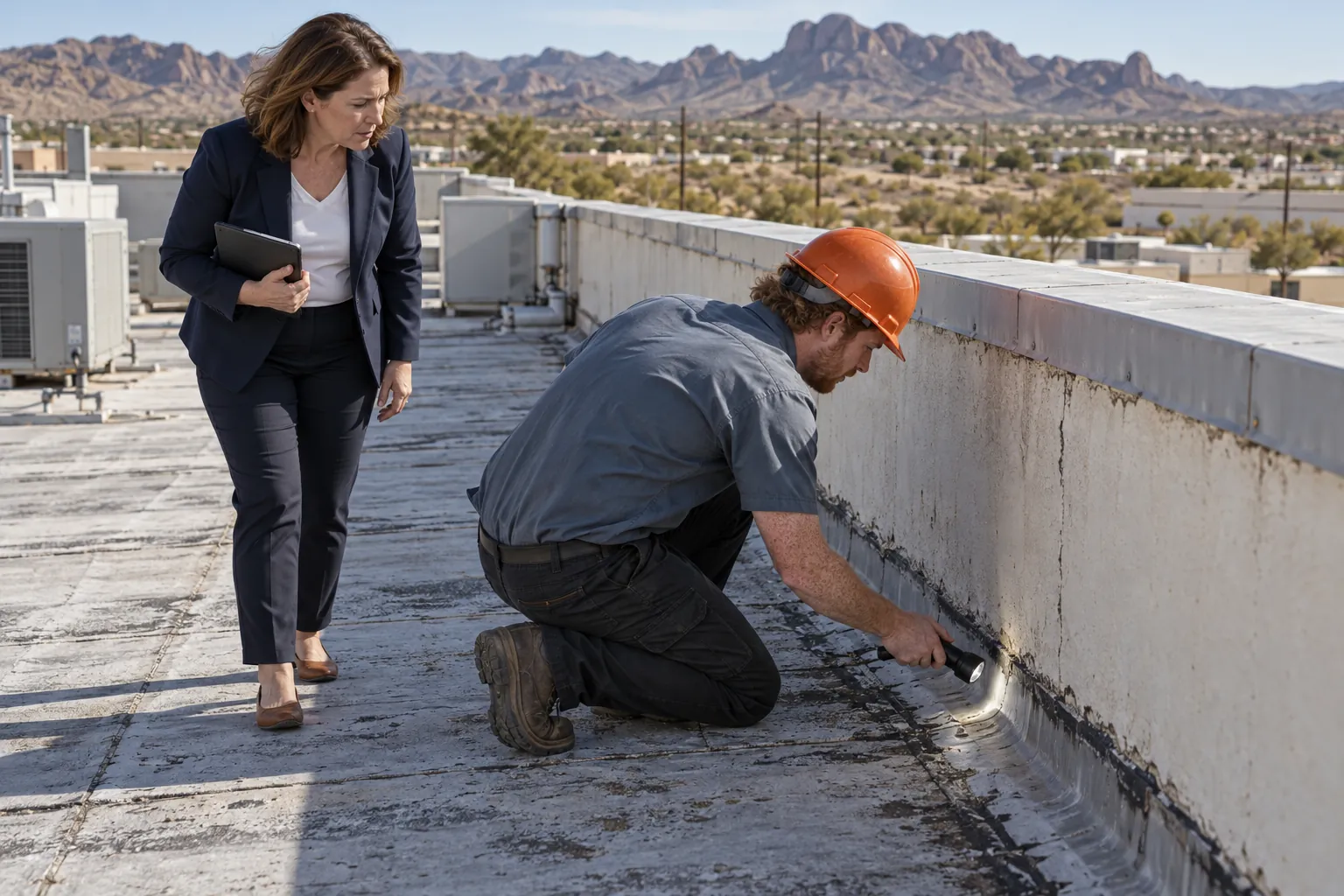
When the stain inside sits far from any obvious opening, leak tracing finds the entry point before the flat roof gets patched.
Leak repair in Kingman
Flat roof repair in Kingman for single-ply and built-up roofs that leak at seams, drains, curbs, parapets, and pipe boots, repaired with material that matches the sheet.
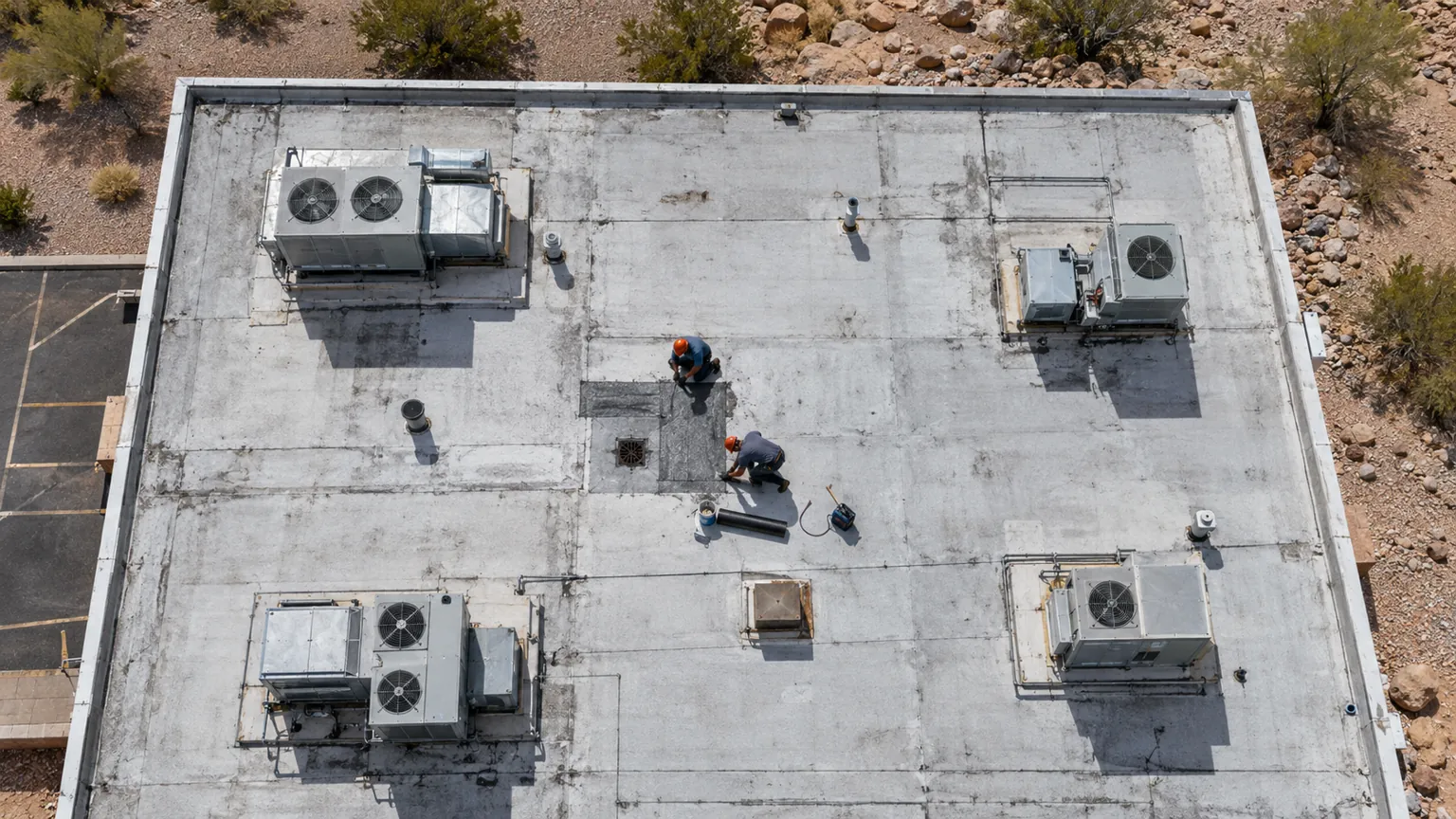 Patching Around A Drain
Kingman flat roofs usually fail at the edges and openings first. The field of the sheet tells you whether a repair has something good to bond to.
These five spots cause most flat roof leaks on Kingman warehouses, shops, and retail buildings.
Each repair matches the roof that is already there. Mixing materials is the most common reason a flat roof patch fails early.
| Repair | What It Fixes | When It Is Enough |
|---|---|---|
| Seam re-weld or re-tape | Open laps on TPO or EPDM sheets | When the sheet on both sides is still flexible and clean |
| Drain and scupper reset | Backed-up water and ponding near outlets | When the slope toward the drain still works once it is clear |
| Curb and pipe re-flashing | Leaks at units, vents, and gas lines | When the curb itself is solid and tall enough |
| Section replacement | A torn or blistered area of the field | When wet insulation stays inside a limited section |
Water that gets past a flat roof seam spreads sideways through the insulation. Each early fix keeps the damage smaller.
A closed seam stops water before it soaks the boards across several bays.
Cleared drains drop water off the roof before the membrane under it wears thin.
Resealed laps and flashings keep summer UV from opening the edges further.
Ceiling tiles and finishes under a repaired seam stop staining with each storm.
Call and say how long water sits after a storm and where the drain or scupper is. A packed outlet is often a quick fix.
Flat roof work follows the water. The roofer starts at the visible damage and finishes with a water test on the repaired detail.
The roofer checks every seam, drain, curb, parapet, and pipe boot, and marks ponding rings and blisters with chalk before anything gets cut.
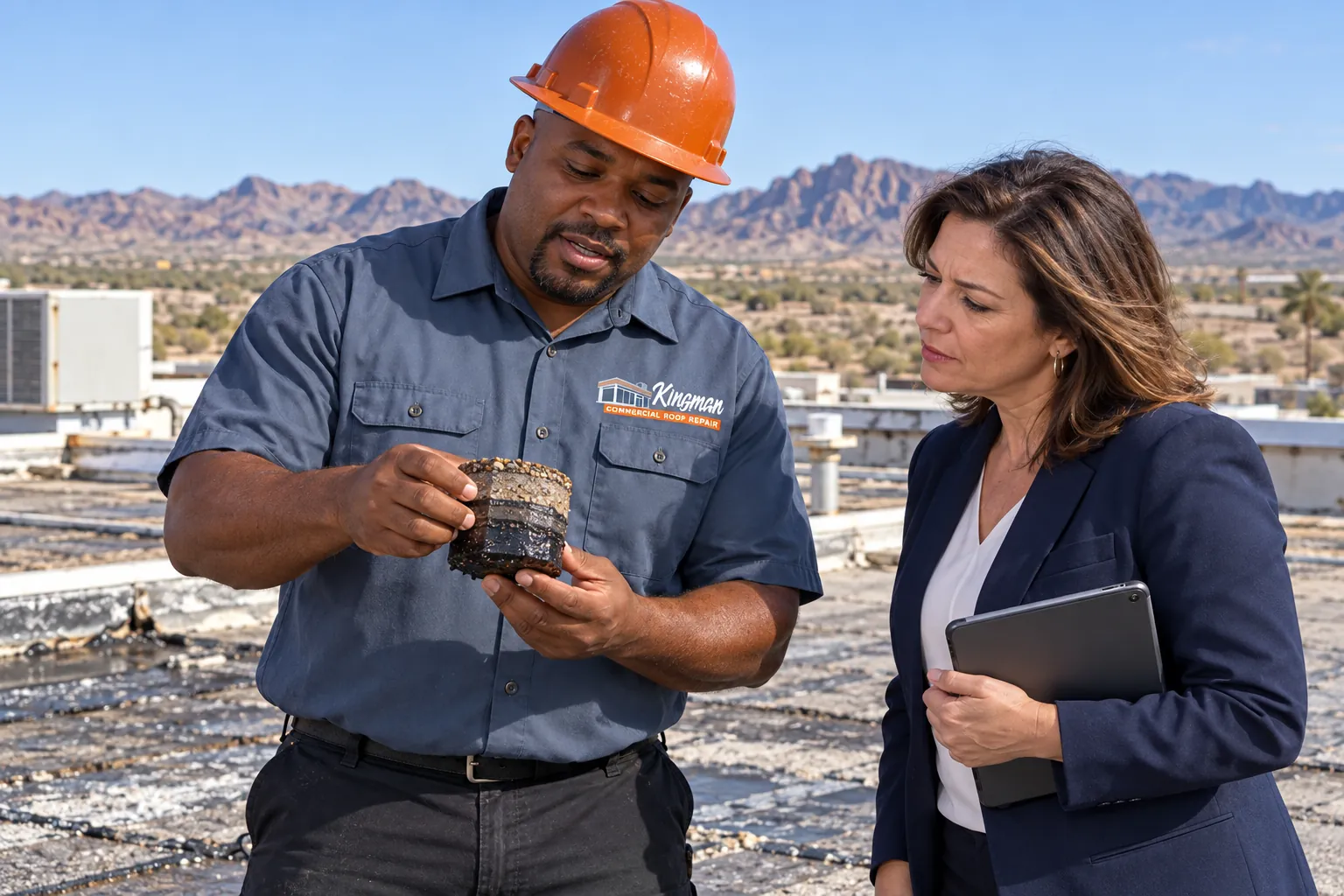
Moisture readings and a few core cuts show how far water traveled under the membrane from the opening.
Membrane over the wet area gets cut back, saturated insulation comes out, and dry boards of the same thickness go in.
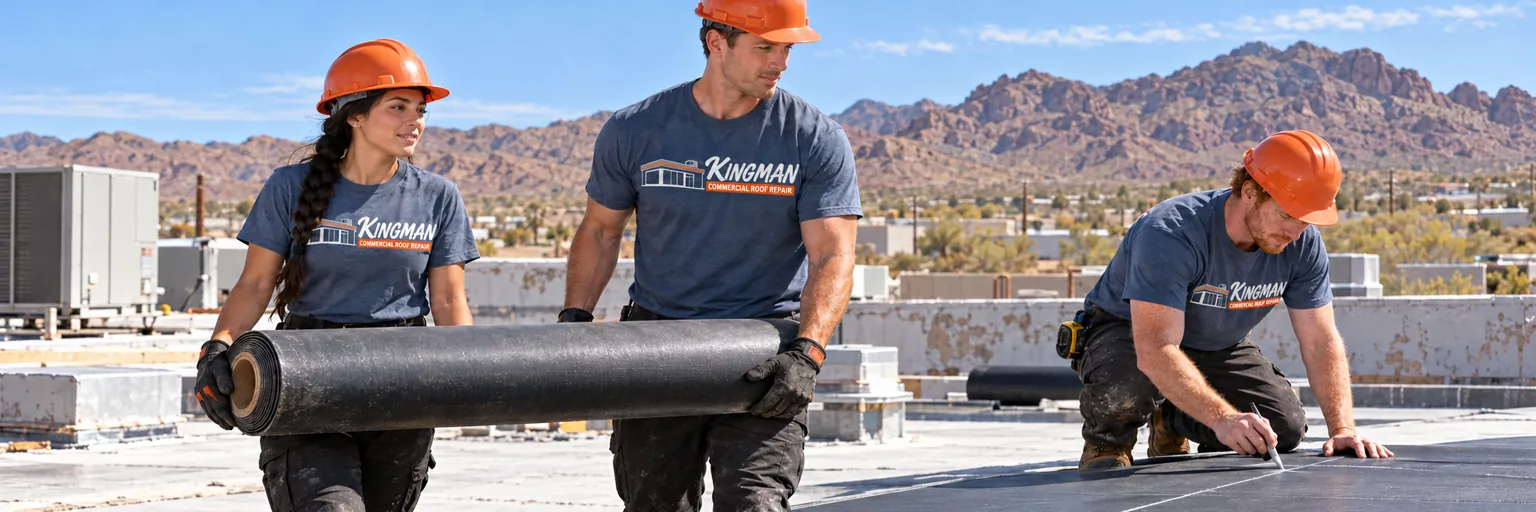
TPO patches are heat-welded and EPDM patches primed and taped, lapping well past the cut onto clean, healthy sheet.
Water runs across the new seams and flashings, and the ceiling below gets checked before the area is closed out.
Flat roof problems often lead to these two services.
When the stain inside sits far from any obvious opening, leak tracing finds the entry point before the flat roof gets patched.
Leak repair in Kingman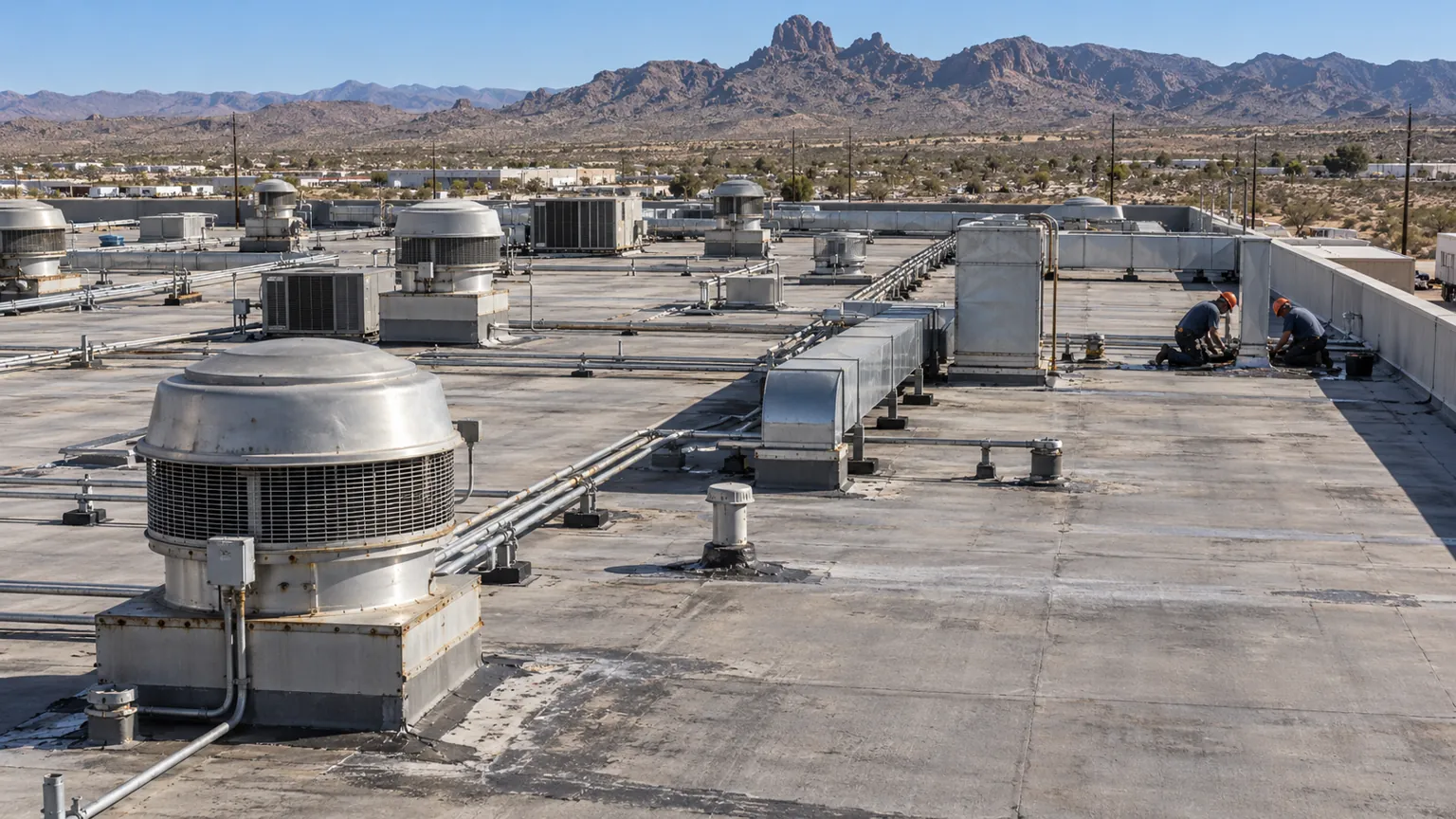
Plant roofs are flat roofs crowded with exhaust fans and ducts, so their repairs get scheduled around production shifts.
Industrial roof repair in KingmanAnswers about membranes, seams, and drains on low-slope commercial roofs.
Most leaks start where the membrane meets something else. On warehouses, shops, and retail roofs, that means seams opened by hot days and freezing nights, drains and scuppers packed with blown dust, HVAC and exhaust fan curbs, cracked parapet coping, and pipe boots with shrinking sealant.
Checking those five places first finds the opening on most flat roofs.
No. The two sheets need different bonding methods, so patches always match the existing membrane. TPO gets a heat-welded TPO patch, and EPDM gets primer and EPDM tape or a cured patch.
A small, firm blister can be watched. A blister that cracks, grows, or sits in a ponding area gets cut open, dried, and patched before water reaches the felts and insulation below.
First the drain and strainer get cleared and the clamping ring reset. If water still sits after two days, the next step is checking for a sagging deck or crushed insulation around the outlet.
Hot-air welding and hand rolling are quiet. Cutting out wet insulation and running a power fastener make short bursts of noise, and those steps get scheduled around tenant hours.
Every seam, drain, scupper, curb, parapet, pipe boot, and skylight, plus ponding rings, blisters, and soft spots underfoot. The roofer also looks at the ceiling stain inside to connect it to the roof above.
Small openings rarely wait well. Summer heat shrinks sealant further and monsoon storms test every seam, so a known leak is best fixed before June. Minor wear without leaks can go on a fall maintenance list.
A single seam or curb flashing is usually a one-visit job. Cutting out wet insulation across a section takes longer, and the time depends on how far the water spread under the sheet.
Describe the seam, drain, or curb you suspect and roughly where the water shows up inside, and we will start with an inspection.
Leave a name and number and we will call you back about the leak or damage.
Or call now: +1 (928) 436-4836