Flat Roof Repair
Drains, scuppers, seams, and low spots on single-ply and built-up roofs.
Flat Roof Repair in Valle Vista
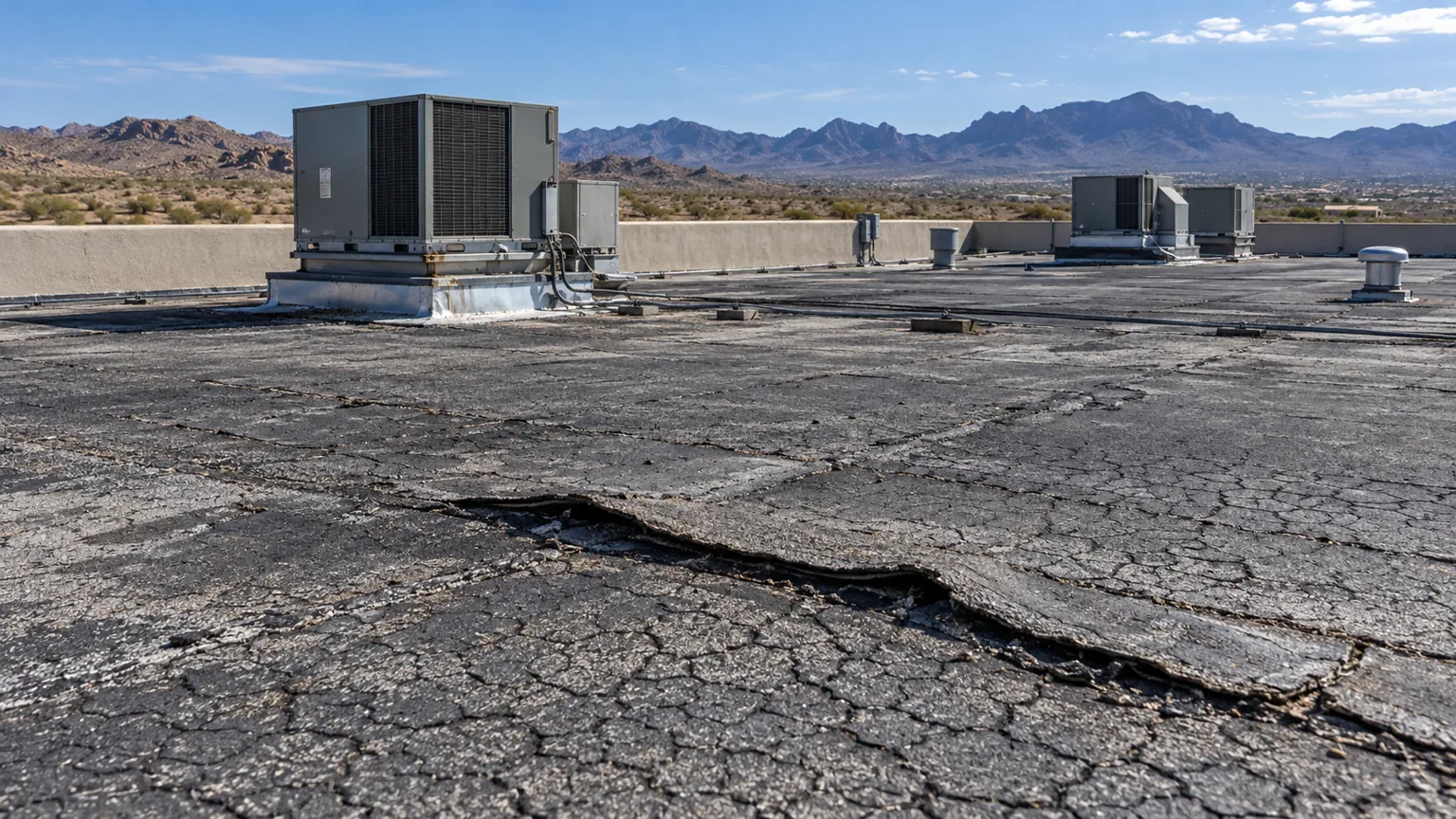
Commercial roof repair in Valle Vista for low-slope roofs along Route 66, where desert debris clogs the drains and water stands in rings after storms.
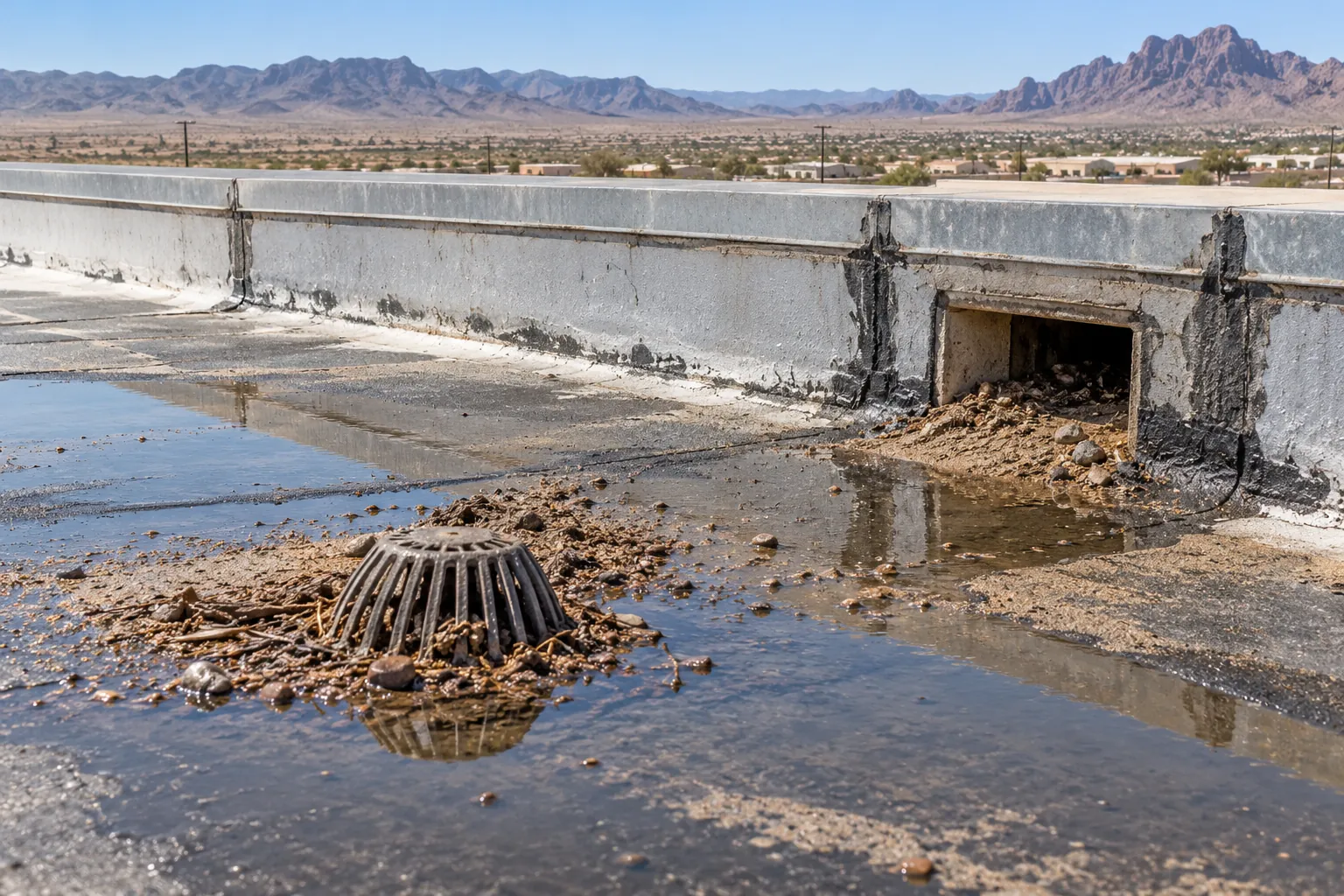 Clearing A Packed Drain
Owners in Valle Vista often call about water that stays on the roof for days. On low-slope roofs along Route 66, blown sand and brush pack the drains, and a few storms later a dirt ring marks where water sat.
Those rings show where the membrane wears faster and where the deck carries extra weight. Fixing ponding means clearing outlets first, then correcting any low spots.
Standing water causes a chain of problems on low-slope roofs.
Water that sits on a roof wears it out faster than water that runs off.
Clear outlets drop water off the roof before it soaks into worn seams.
Removing ponds takes extra weight off the deck after every storm.
Laps that dry out between storms keep their weld or tape longer.
Drains cleared in spring handle the June to September storms.
Ponding and drain work falls under these two services.
Drains, scuppers, seams, and low spots on single-ply and built-up roofs.
Flat Roof Repair in Valle Vista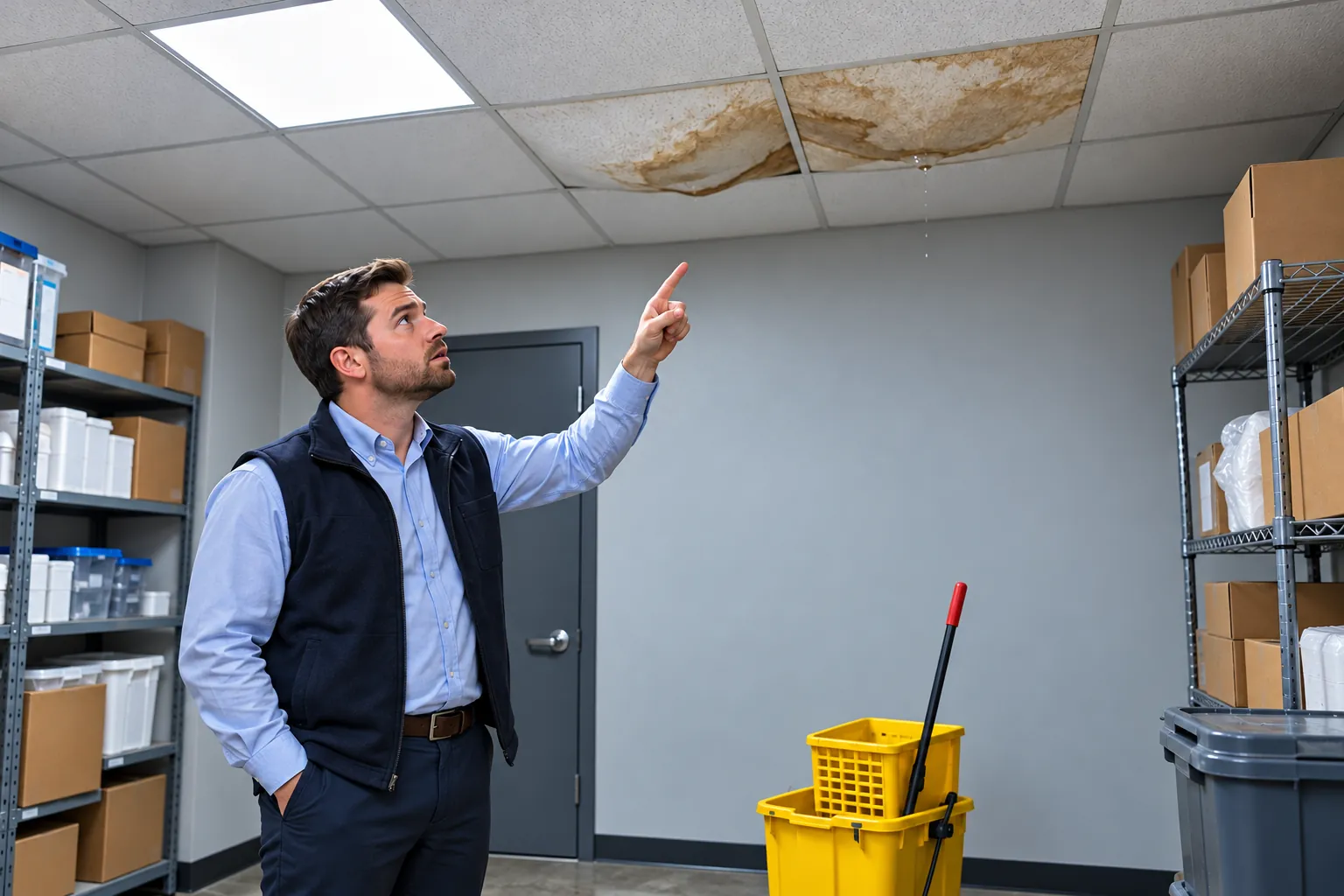
Tracing slow leaks that start inside a ponding ring and show up later inside.
Commercial Roof Leak Repair in Valle Vista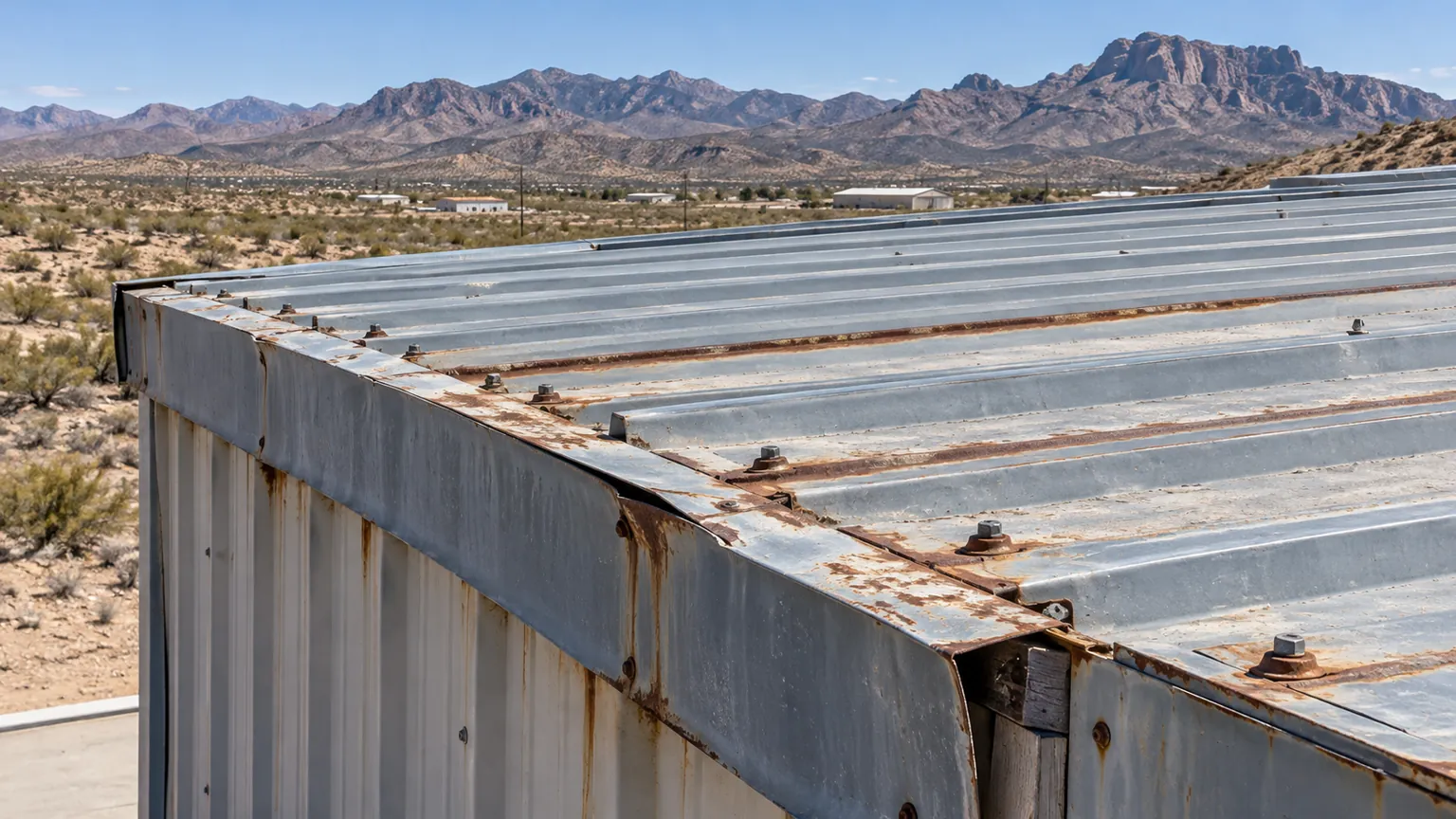
Steel buildings along Route 66 collect sand in gutters and valleys too, and their screws and laps get checked while the outlets are cleared.
Commercial Metal Roof Repair in Valle VistaCall and tell us how long water sits after a storm and where the drains are. A packed outlet is often the whole problem.
Ponding repairs start at the outlets and work back across the roof.
The roofer checks every drain and scupper, maps the dirt rings, and probes the membrane inside each one for soft spots. Dry dirt rings are easiest to read a few days after rain, before wind scours them.
Each ring gets measured and checked for crushed insulation or a sagging deck below it. A straightedge and a level show whether the low spot is in the insulation or the deck.
Outlets get cleared, and wet or crushed boards under the low spots come out. Wet boards set aside on the roof show how far the water traveled from the pond.
New boards, tapered insulation, or crickets go in, and the membrane gets patched over them. Tapered boards run toward the nearest outlet so water has a clear path off the roof.
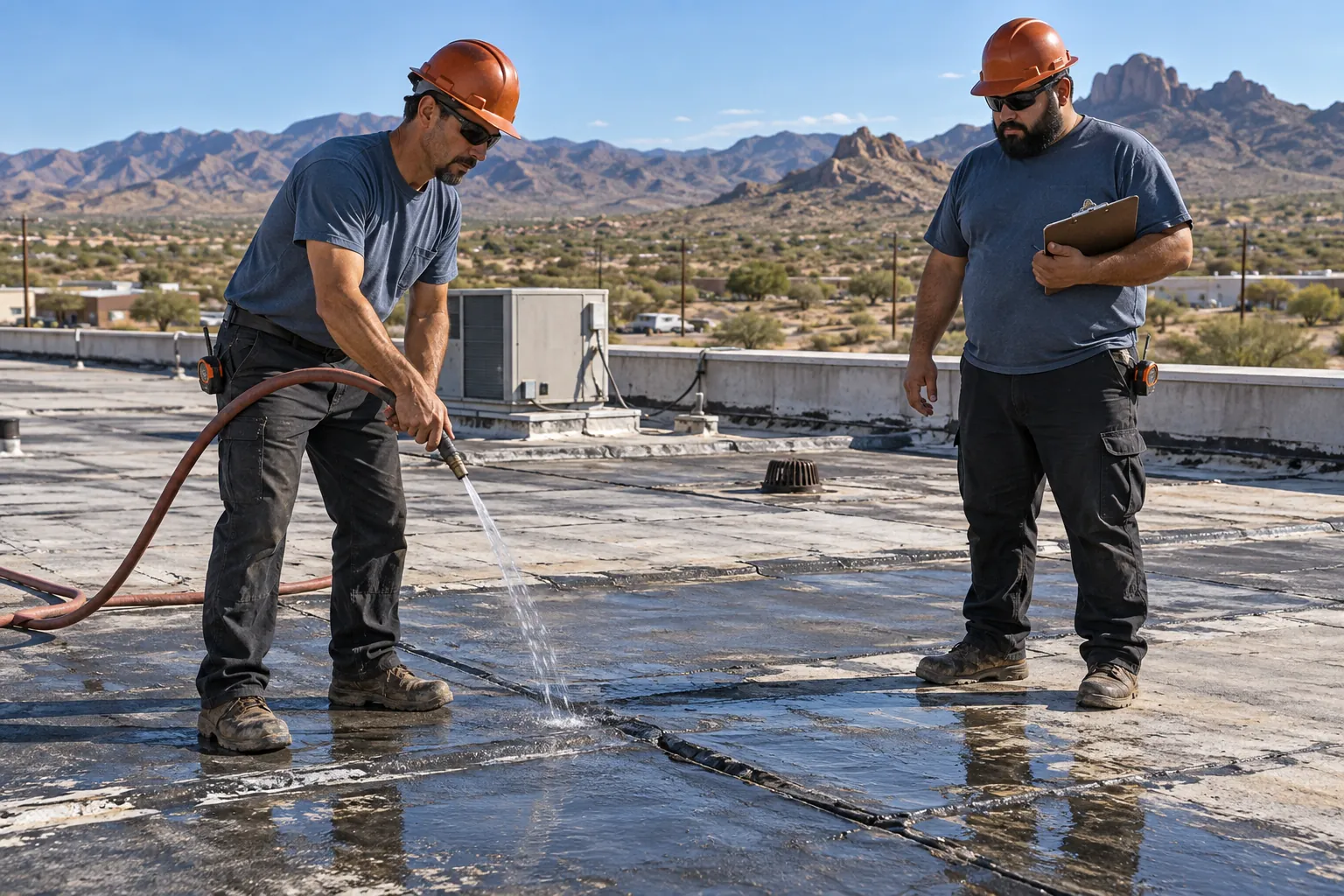
Water runs across the repaired area to confirm it reaches the outlet instead of sitting. Any water still sitting after the test gets marked for a second look.

These communities sit close to Valle Vista.
Common questions from Valle Vista building owners.
Water stands on a roof when a drain clogs, the deck sags, insulation crushes, or the roof was built with too little slope.
After a monsoon storm, lingering water leaves a dirt ring you can spot once it dries. Those rings mark areas where the membrane wears faster and the deck carries extra weight. Fixes range from clearing drains to adding taper or crickets.
Valle Vista is unincorporated Mohave County, so the Mohave County Building Division handles permits. Slope corrections and deck work are more likely to need one than a drain cleaning. Bring a parcel number and a short description of the work when you ask.
Water gone within about two days after a storm is usually fine. Water that stays longer, or leaves a ring, points to a drain or slope problem worth fixing. Rings that grow larger each season point to a deck that is slowly sagging.
A small built-up ridge of tapered insulation that splits water around a curb or toward a drain. Crickets fix ponding behind units and along walls. They are built under the membrane, so the finished roof surface stays watertight.
Often, yes. Clearing outlets, replacing crushed boards, and adding taper at low spots fix most ponding. A deck that sags widely calls for bigger work. Deck sag shows up from inside as bowed deck flutes or a ceiling that dips.
Open desert and steady wind carry sand onto roofs along Route 66. Parapets and units trap it, and rain washes it into drains, so outlets need regular clearing. Screens over the outlets can slow the buildup between cleanings.
Not always, but water sitting on seams wears them faster. A pond over an old patch or a lap is the most likely place for a new leak. Old patches inside a ponding ring deserve a close look at every inspection.
At least each spring before monsoon season, and after strong windstorms. Roofs near open desert lots may need more frequent checks. A quick look after any dust storm keeps outlets from choking before rain arrives.
Say how long water sits after a storm and send a few photos of the rings if you have them, and the inspection starts at the outlets.
Leave a name and number and we will call you back about the leak or damage.
Or call now: +1 (928) 436-4836