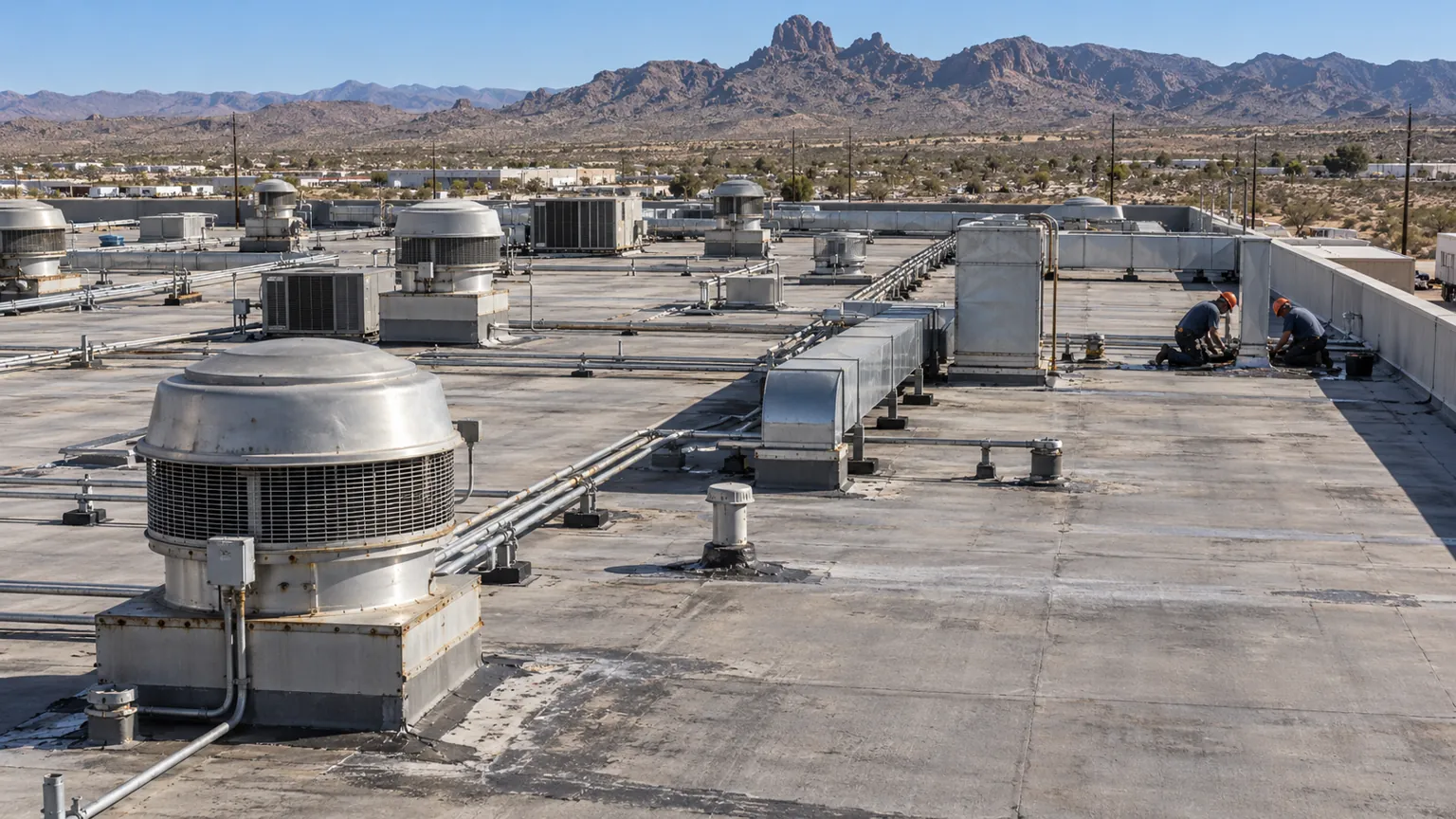
Industrial Roof Repair
Exhaust fan zones, curbs, supports, and walk paths repaired around production.
Industrial Roof Repair in Griffith Industrial Park
Commercial roof repair in Griffith Industrial Park for plant roofs off I-40, where heat, vibration, and process residue wear the membrane around exhaust fans.
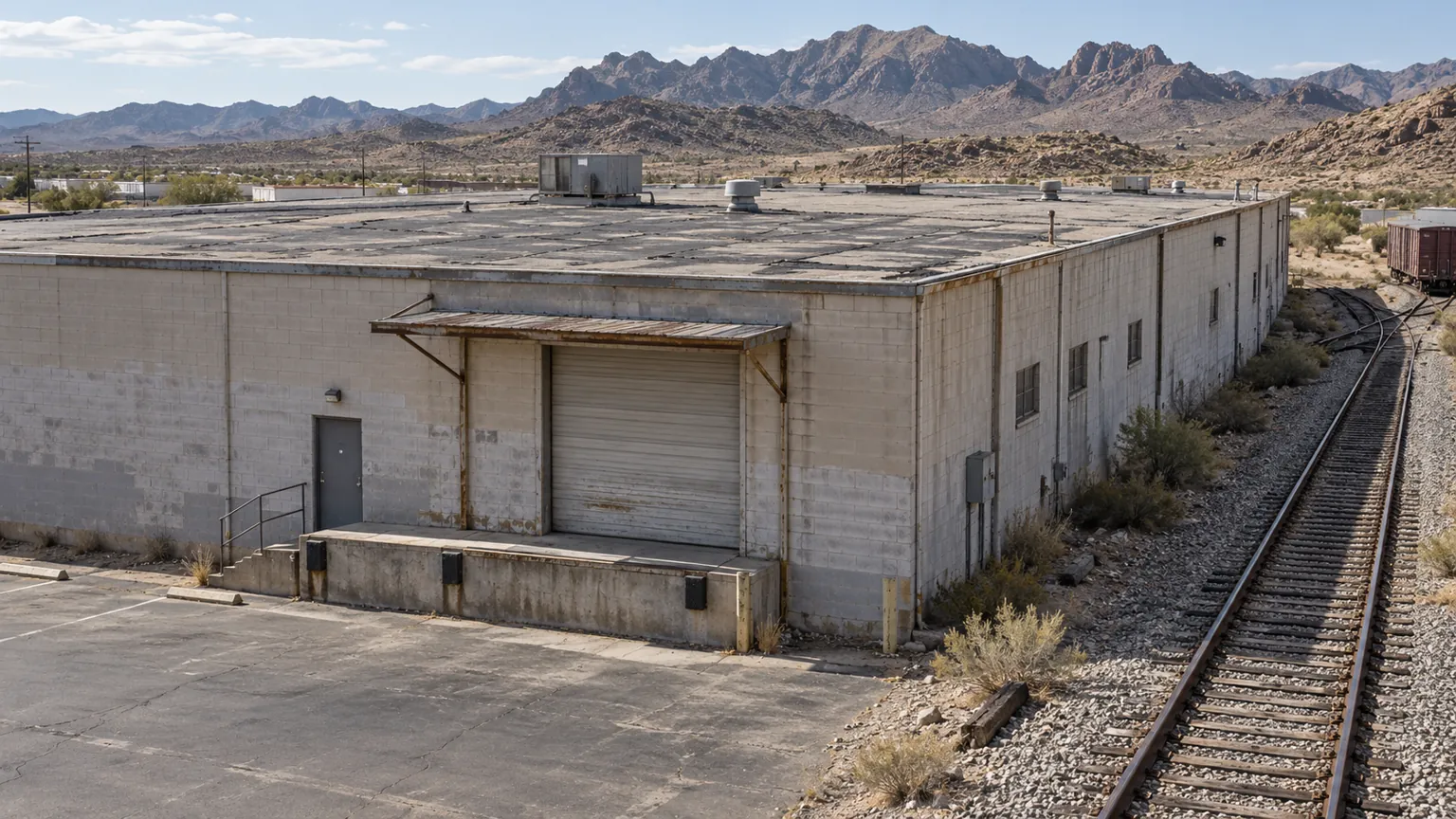 Plant Roof Off I-40
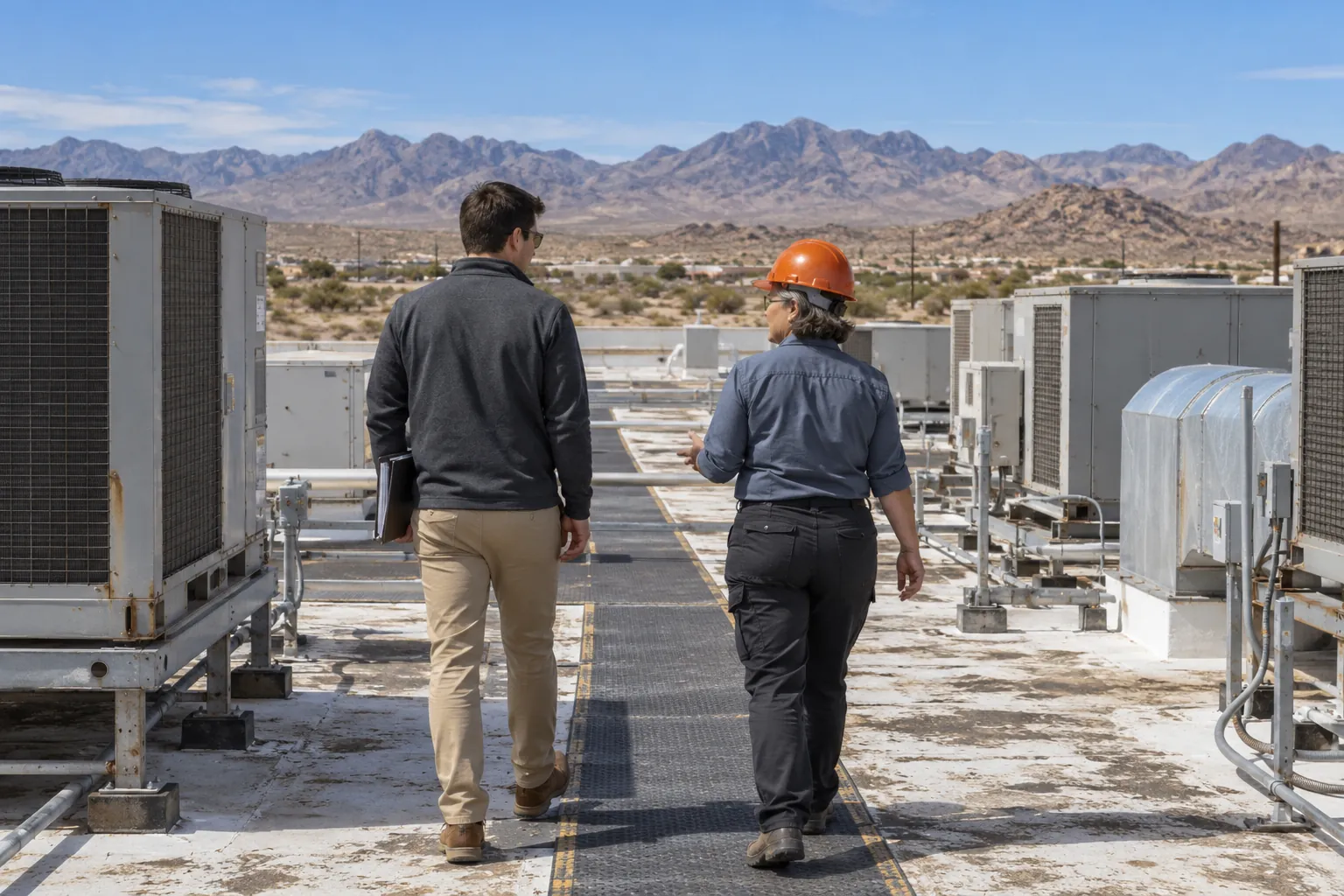
Griffith Industrial Park sits about 12 miles south of Kingman right on I-40, according to Mohave County. Its plant and warehouse roofs carry exhaust fans, ducts, and units on curbs.
The membrane around those fans takes heat, vibration, and residue from the process below. That zone wears out years before the rest of the roof, so repairs focus there.
Equipment zones on these roofs show wear first.
Damage around plant equipment spreads fast once water gets under it.
Sealed fan and unit curbs keep water out of ducts and electrical.
Floors and products below the roof stay dry while work continues.
Padded paths across the membrane give technicians firm footing near equipment.
Fixing the fan area early keeps wet insulation local.
Plant roof work here falls under these two services.
Exhaust fan zones, curbs, supports, and walk paths repaired around production.
Industrial Roof Repair in Griffith Industrial Park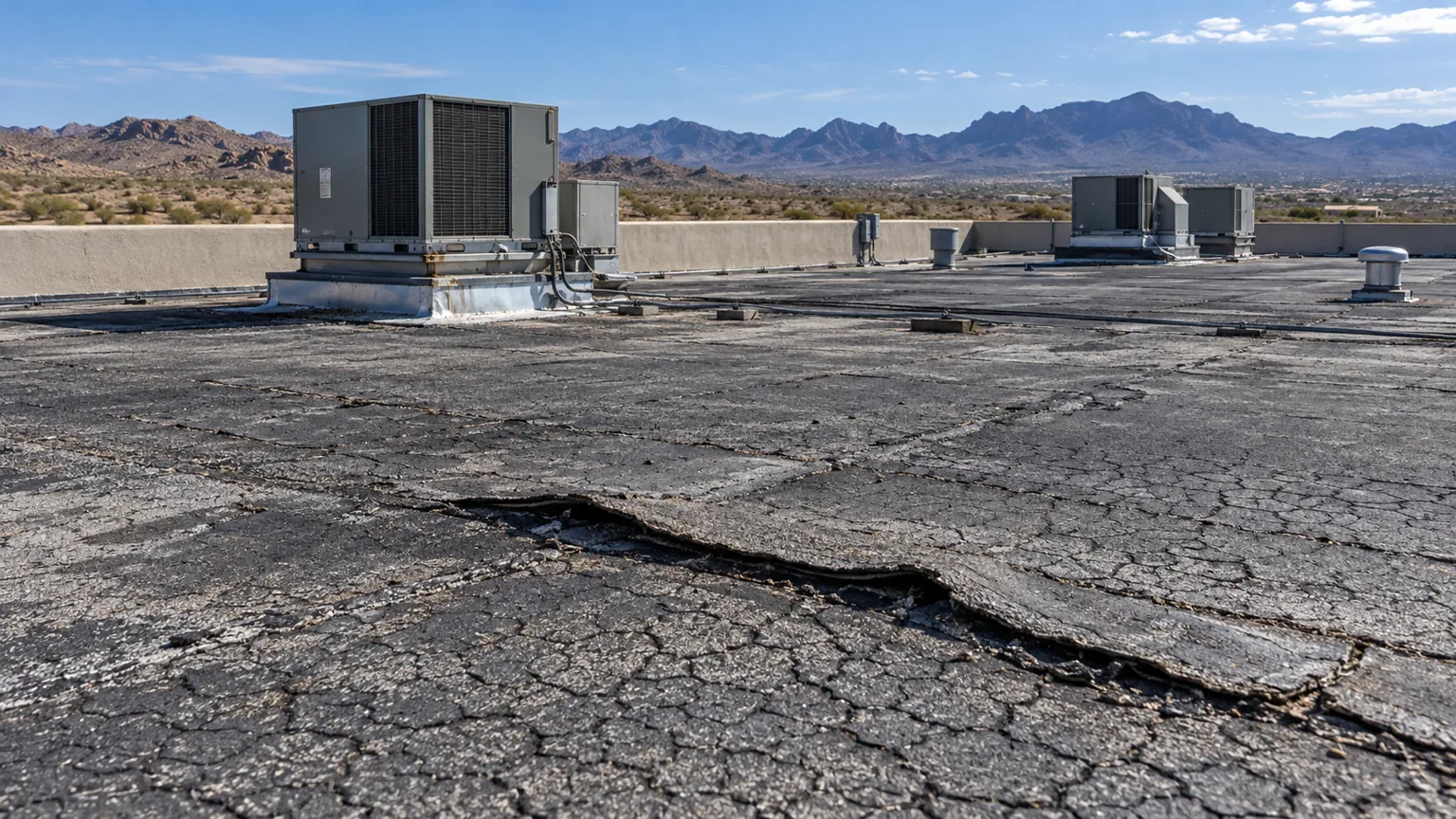
Seams, drains, and field membrane away from the equipment.
Flat Roof Repair in Griffith Industrial Park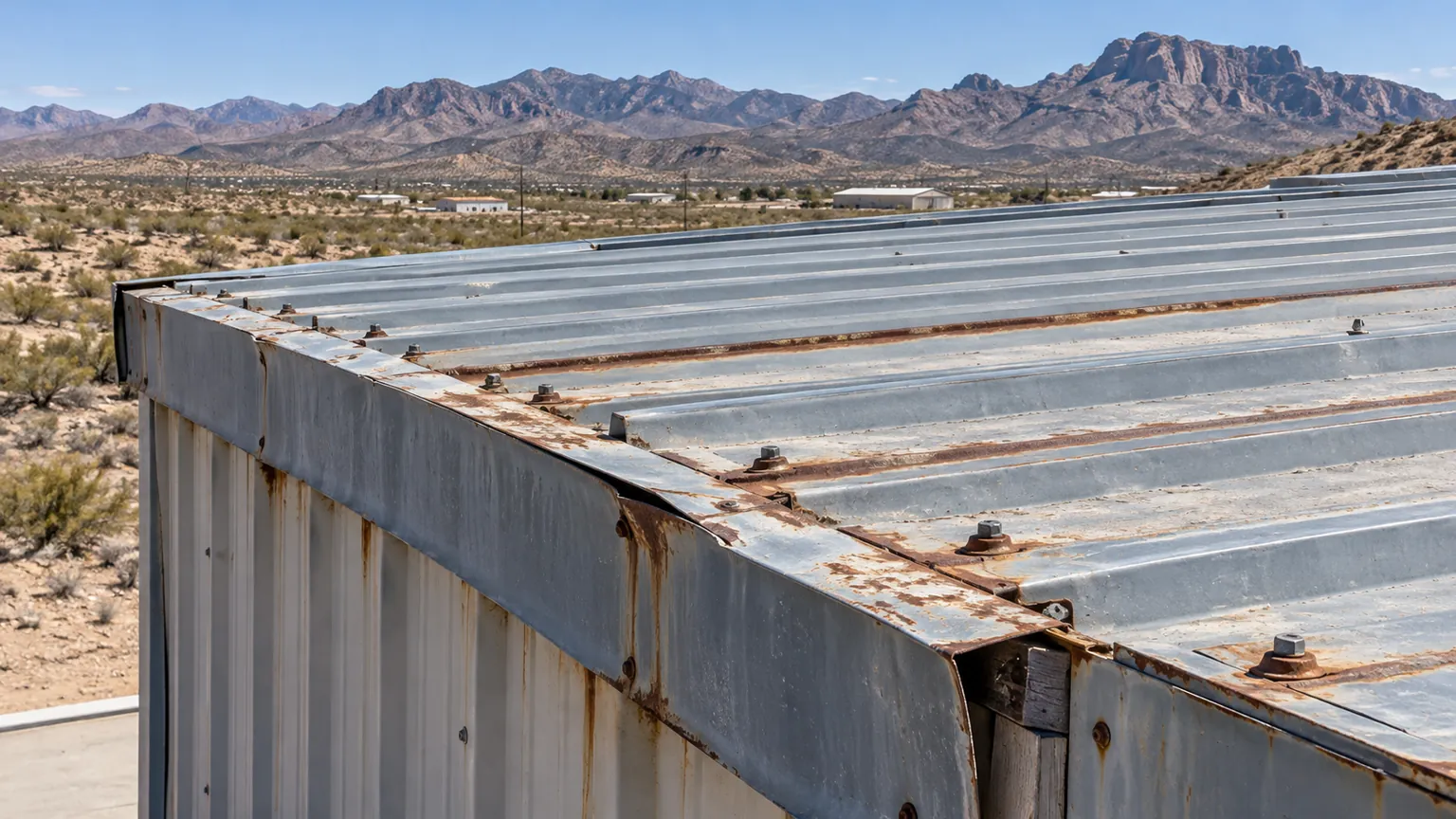
Steel warehouses in the park carry exposed-fastener panels, where loose screws and open laps get metal roof repair.
Commercial Metal Roof Repair in Griffith Industrial ParkCall and name the line or area under the leak and the equipment above it, so the visit can be planned with your maintenance lead.
Plant roof repairs are planned around the equipment and the people below.
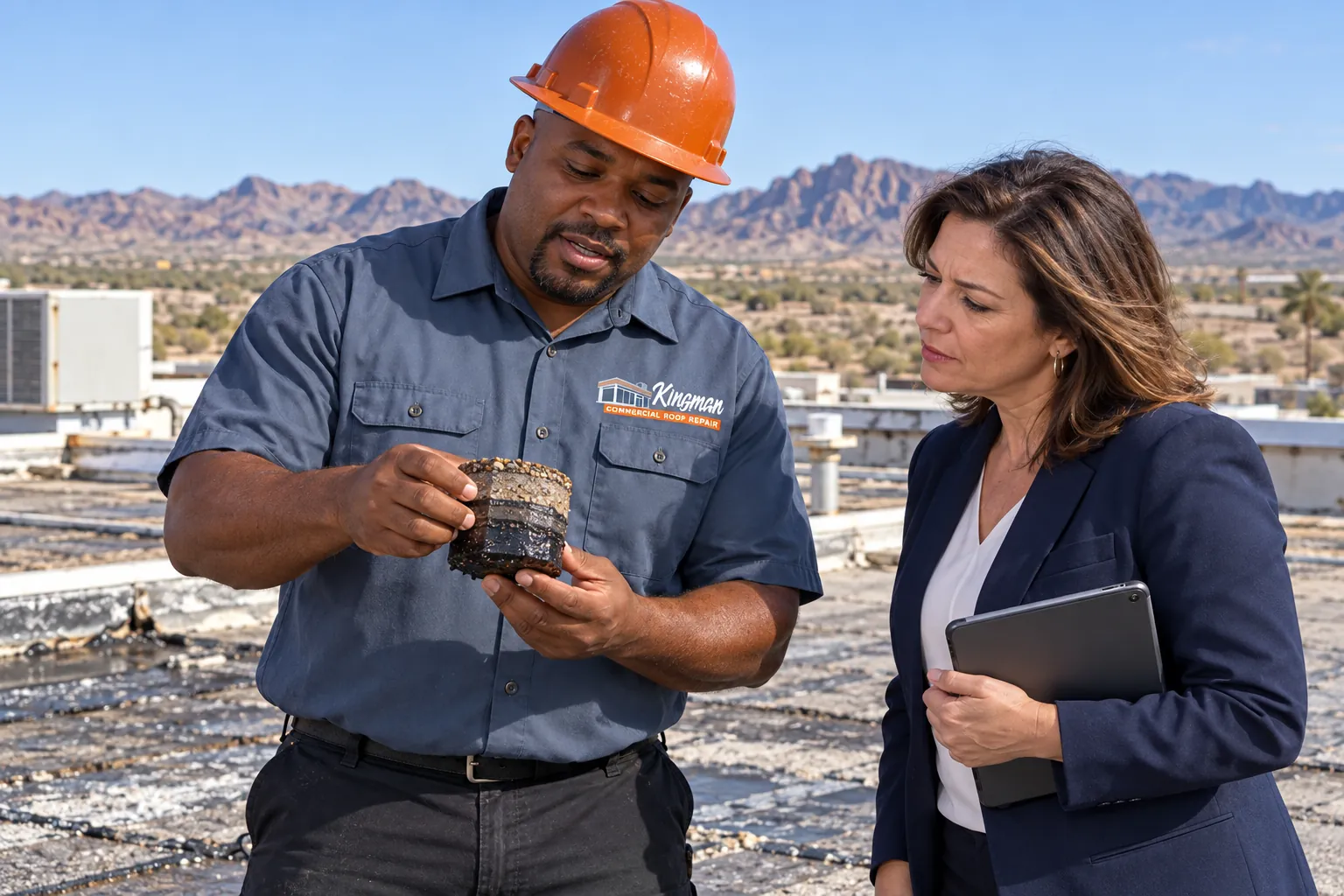
The roofer and maintenance lead walk the roof, noting each fan, unit, duct run, and the areas of the plant below them. Areas over sensitive processes or stored product get flagged before any roof work starts.
Softened membrane, cracked curb flashing, and worn paths get marked around each piece of equipment. Residue stains around outlets help show how far the softened zone reaches.
Fans near the work get locked out with maintenance approval, and damaged membrane comes out. Intakes near the work get covered or shut down as the plant agrees.
New membrane, re-flashed curbs, supports on pads, and walkway pads go in zone by zone. Heat welding near intakes gets timed for shift changes when the plant prefers.
Repaired curbs get a water check and equipment returns to the maintenance team. A short walkthrough with maintenance confirms every unit is back in service.
These communities sit near Griffith Industrial Park.
Common questions from Griffith Industrial Park plant and facility managers.
Equipment zones age fastest. Exhaust heat, fan vibration, and residue from the process below break down the membrane and flashing there long before the open field.
Industrial roofs around Kingman carry exhaust fans, ducting, and units on curbs. Watch for cracked curb flashing, softened membrane near exhaust outlets, and worn paths where technicians walk to the units.
Griffith sits outside Kingman city limits, so the jurisdiction gets confirmed by parcel, usually with the Mohave County Building Division. Have the parcel number ready, since addresses near the park can mislead.
Yes. Work areas get planned with the plant, fans near the work are locked out with maintenance approval, and each area is closed by the end of the shift. Noisy or odor-producing steps can be timed for shift changes.
Heat and chemical residue from the exhaust break down the sheet. The softened area loses strength and eventually splits, so it gets cut out and replaced. Cutting out a margin of healthy sheet around the soft area keeps the patch from failing at its edge.
Yes. Pads spread the weight of technicians and their tools and keep them on one path, which stops the membrane from wearing through along the path to units. Pads also keep tool bags and parts from scraping the membrane.
Yes. Material lifts and ladders get placed away from active docks and rail areas, with the plant deciding where staging can go. Staging spots get agreed before the visit so trucks and trains are never blocked.
It can if curbs and penetrations are not flashed into the roof. Adding equipment is a good time to have the roof work planned at the same time. Curbs set at the right height before installation save a second round of roof work later.
Twice a year at minimum, plus after equipment changes. Exhaust zones benefit from a quick look at every routine maintenance visit. Exhaust zones change fastest, so they get the closest look at each visit.
Tell us about the plant, the rooftop equipment, and your shift schedule, and the visit starts with a roof map.
Leave a name and number and we will call you back about the leak or damage.
Or call now: +1 (928) 436-4836