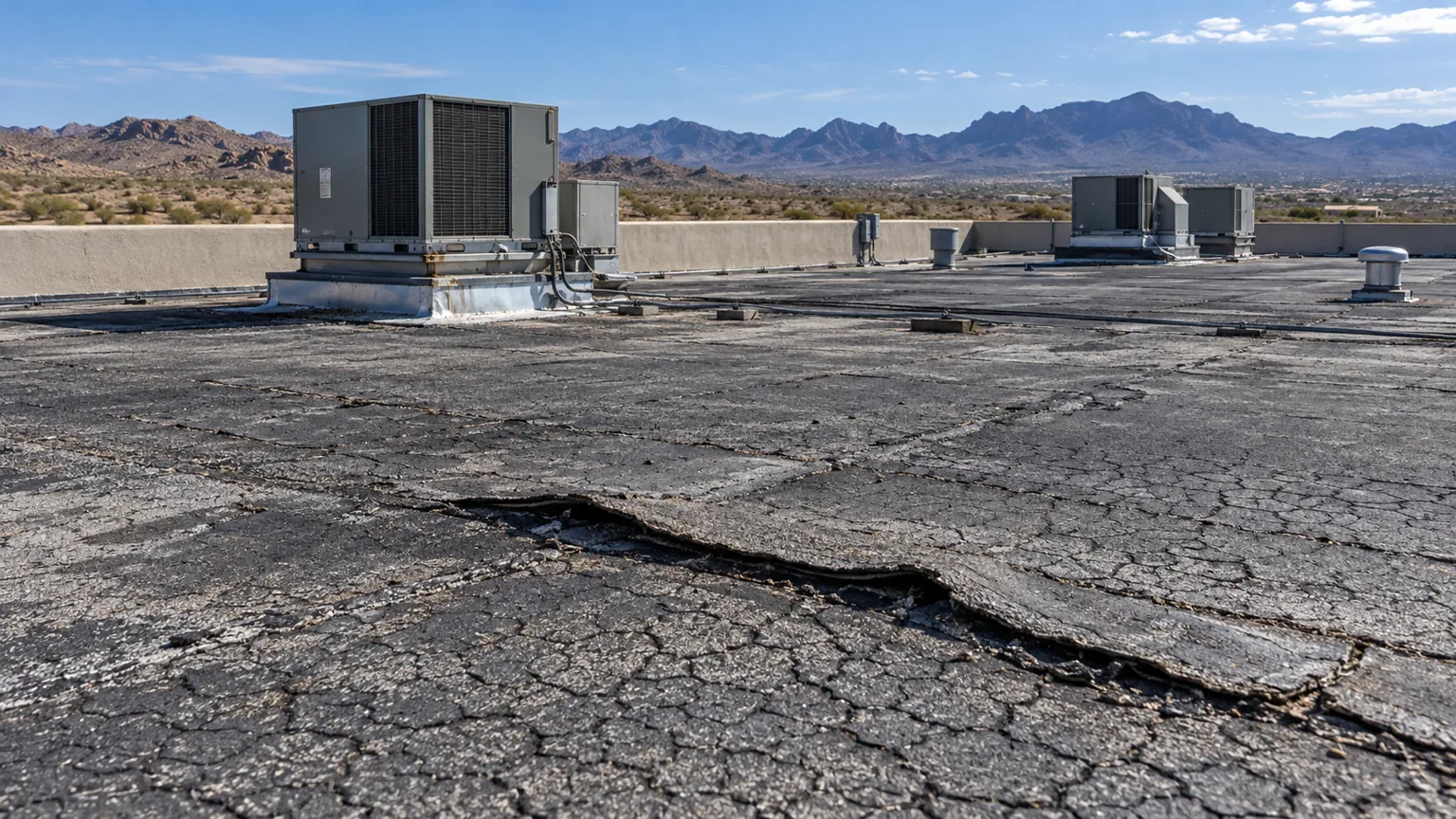
Flat Roof Repair
Base flashing, seams, and scuppers on the low-slope roof behind the parapet.
Flat Roof Repair in New Kingman-Butler
Commercial roof repair in New Kingman-Butler for retail and office buildings whose parapet walls let water in at the coping, counterflashing, and base flashing.
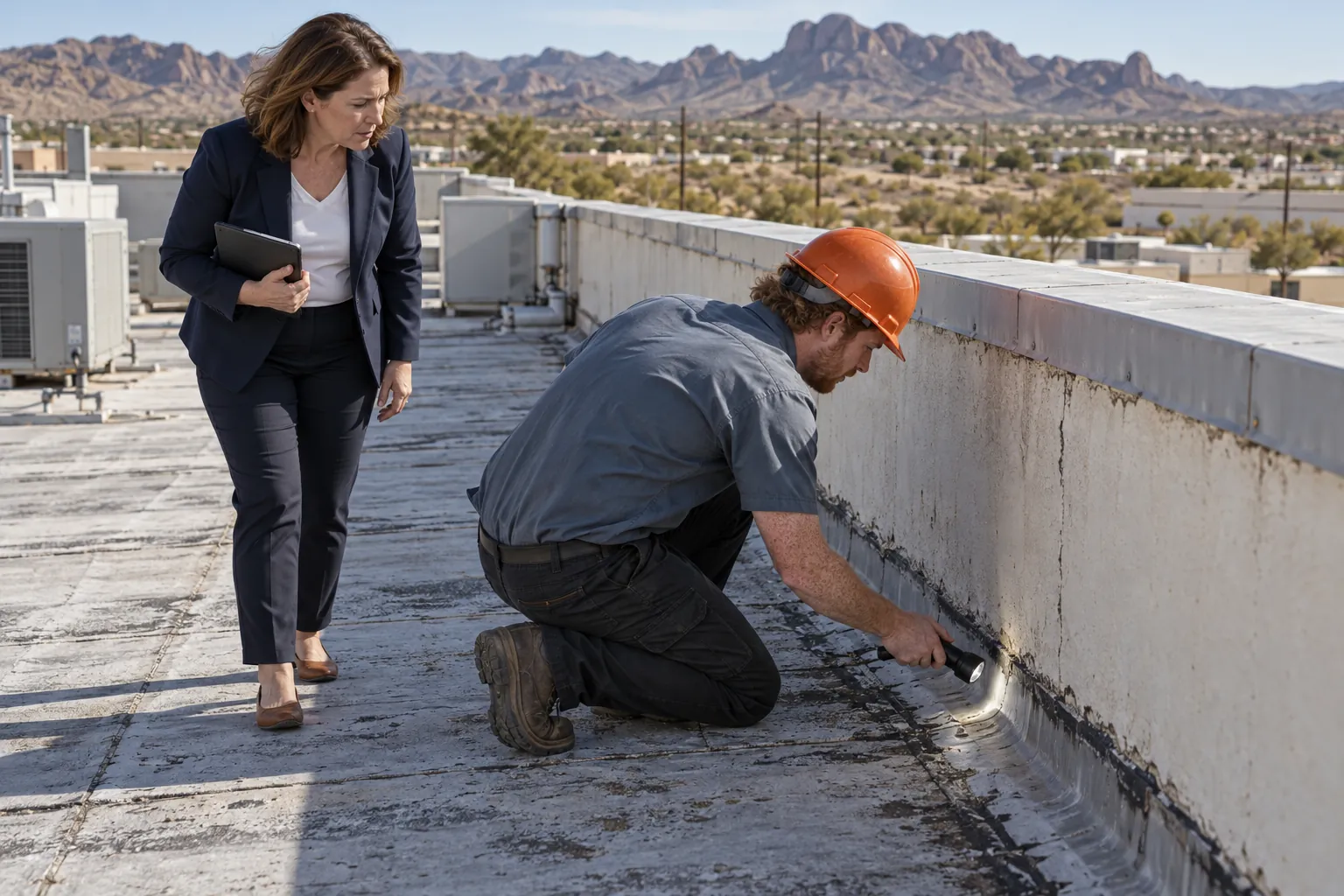 Probing Parapet Flashing
Many retail and office buildings at the north edge of Kingman hide a low-slope roof behind a block parapet. The wall keeps the roof out of sight, and it also gives water three ways in: the coping on top, the counterflashing on the face, and the base flashing where wall meets roof.
Parapet leaks often show up as damp drywall or peeling paint on an outside wall, well before a ceiling stain appears.
Parapet trouble on these buildings follows the wall from top to bottom.
Water inside a parapet wall stays hidden longer than water on a ceiling.
Sealed parapet coping keeps the inside of the block wall from soaking with each storm.
Paint and finishes on outside walls stop peeling once water stops entering above.
Refastened counterflashing holds through windstorms instead of peeling loose.
Re-adhered base flashing keeps water from reaching the roof deck at the edge.
Parapet work here falls under these two services.
Base flashing, seams, and scuppers on the low-slope roof behind the parapet.
Flat Roof Repair in New Kingman-Butler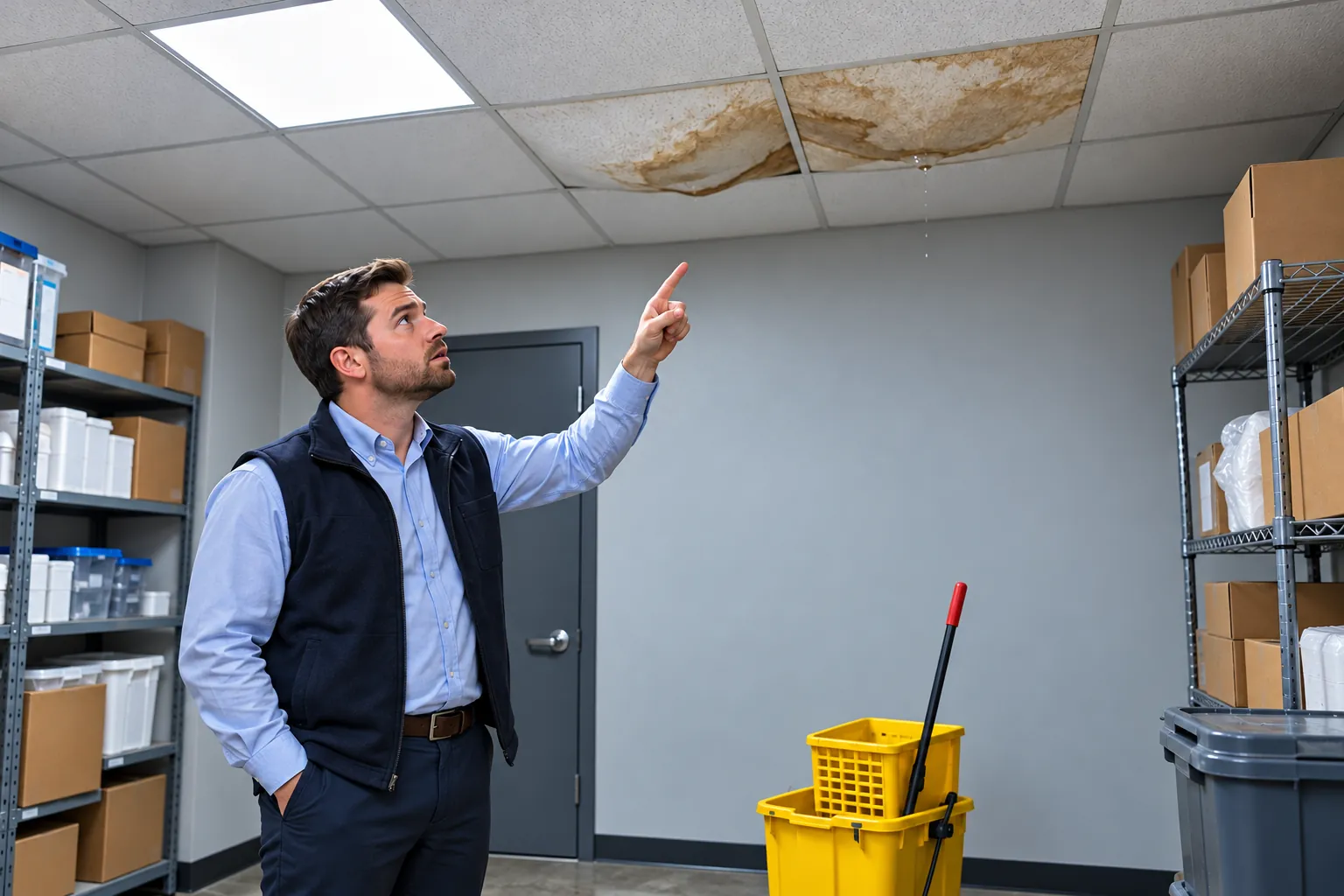
Tracing damp walls and stains back to the cap, counterflashing, or scupper that failed.
Commercial Roof Leak Repair in New Kingman-Butler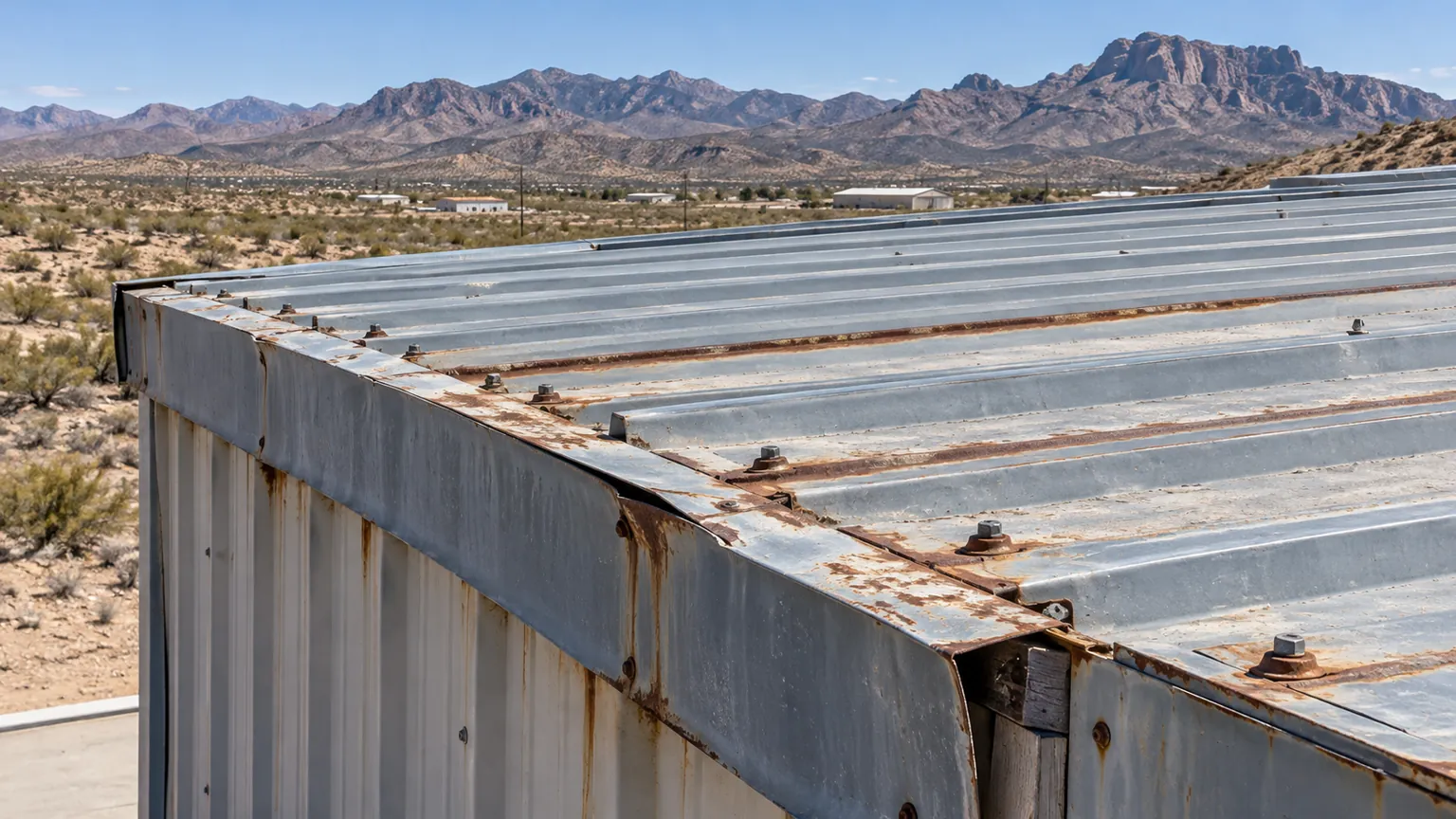
Some north-edge buildings pair a parapet front with a metal roof behind it, and those screws, laps, and trim get metal roof repair.
Commercial Metal Roof Repair in New Kingman-ButlerCall and say which wall shows the damp and how high it sits. Parapet leaks start at the top, so that tells us where to look.
Parapet repairs work from the top of the wall down to the roof.
The roofer checks coping joints, counterflashing, base flashing, and scuppers on every parapet, plus the low-slope field behind them. Stains inside get photographed so the wall above them can be matched on the roof.
Damp spots inside get lined up with the coping and flashing above them on the same wall. Peeling paint or efflorescence on the outside face of the block often marks the same spot.
Coping caps come off where joints failed, so the wall top and cleats can be checked and dried. Rusted cleats under the caps get replaced while the wall top is open.
Caps get reset and sealed, counterflashing refastened, and base flashing re-adhered under it. New sealant at cap joints goes over backer rod so it can stretch with daily heat.
Water runs along the cap and flashing while someone checks the inside face of the wall. A second check after the next storm confirms the wall is drying out.
These communities sit close to New Kingman-Butler.
Common questions from New Kingman-Butler building owners.
Wind damage starts at the perimeter, where uplift is strongest. Look for coping or edge metal that rattles, bends up, or has lost cleats, membrane lifted near the edge, and shifted trim.
On metal roofs, corner panels show backed-out screws first. Small lifts become large tears in the next storm, so edges get fixed first.
New Kingman-Butler is unincorporated and sits along the north edge of the city, so the Mohave County Building Division usually applies. Addresses near the city line can mislead, so confirm the jurisdiction by parcel. The county building division can tell you which office covers a given parcel.
Water often enters at the coping cap on top of the parapet and runs down inside the block. The roof field can be dry while the wall cavity soaks. Interior damp often shows up weeks after the cap joint first opens.
Usually, when they are straight and not rusted through. Caps get lifted, cleats reset, and joints resealed. Bent or corroded caps get replaced to match. Matching the profile keeps the parapet looking the same from the street.
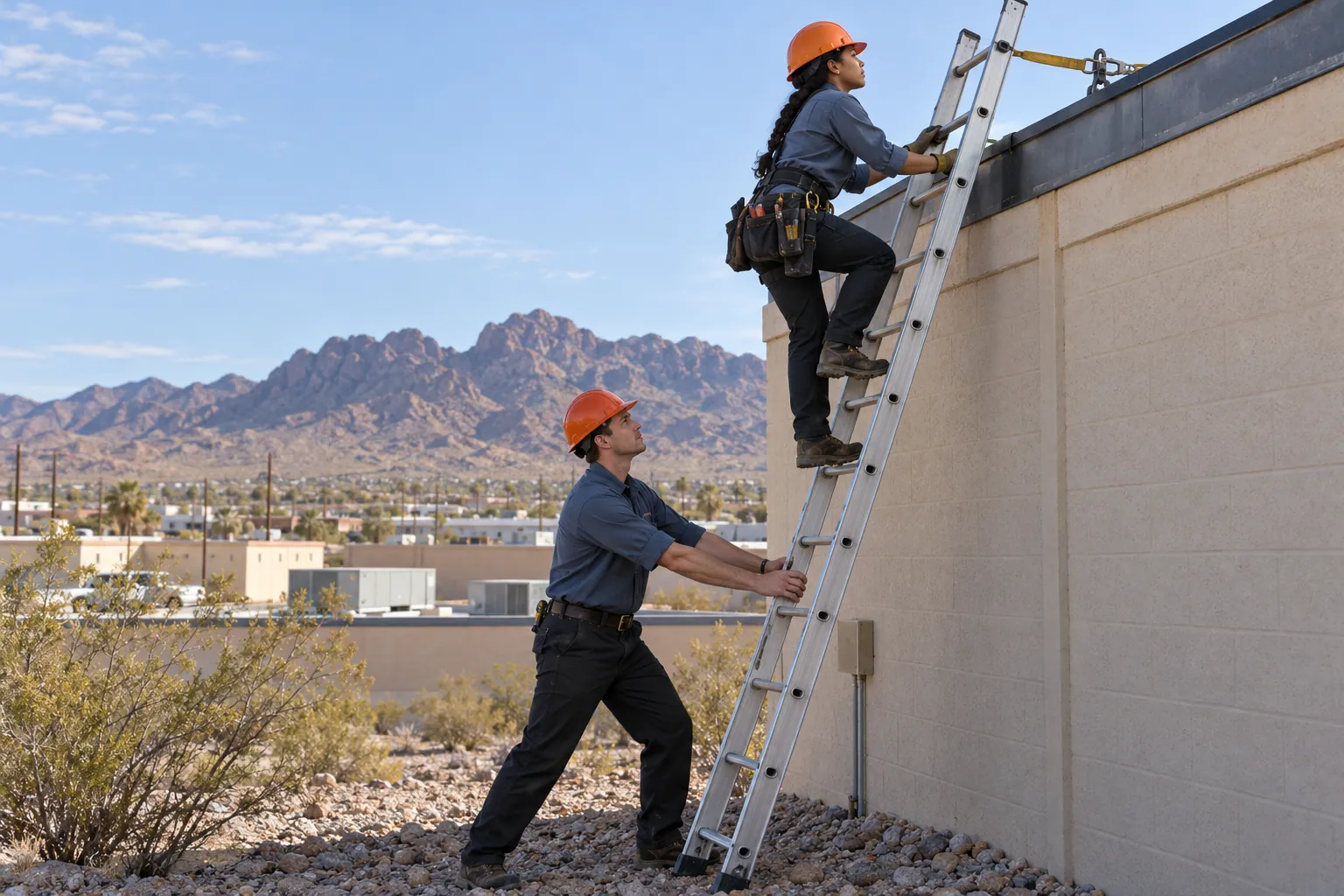
Yes. Parapet work happens from the roof side, so entrances stay open. Ladders and material lifts get placed away from customer doors and parking. Work near the roof edge follows fall protection rules for everyone on the roof.
It is the metal strip fastened to the parapet face that covers the top of the base flashing. When it loosens, rain gets behind the base flashing and into the building. Without it, the top edge of the base flashing is open to every rain.
Twice a year, in spring and fall, and after any strong windstorm. Coping joints and counterflashing are easy to check during a routine roof walk. A pair of binoculars from the parking lot shows open cap joints between visits.
Rarely. Most repairs reseal joints, refasten metal, and re-adhere base flashing at the failed spots, leaving the rest of the wall as it is. Replacing whole runs of coping only makes sense when most caps are bent or rusted.
Tell us which wall shows damp or stains and what the roof edge looks like, and the inspection starts at that parapet.
Leave a name and number and we will call you back about the leak or damage.
Or call now: +1 (928) 436-4836